In the just short of sixty years, we have had progressive rock on dear old planet earth, there have, to me, been discernible waves. The first, classic era of the 70’s had diminished by the early 80’s, but then a new wave in the middle of that decade took prominence. I believe that the early 90’s saw a definitive third wave, this time driven by non-UK artists, and at the forefront of that, alongside such luminaries as The Flower Kings, were American act, Spock’s Beard, named, of course, after that famous episode of Star Trek in which Kirk enters a mirror universe to be greeted by a hirsute Vulcan.
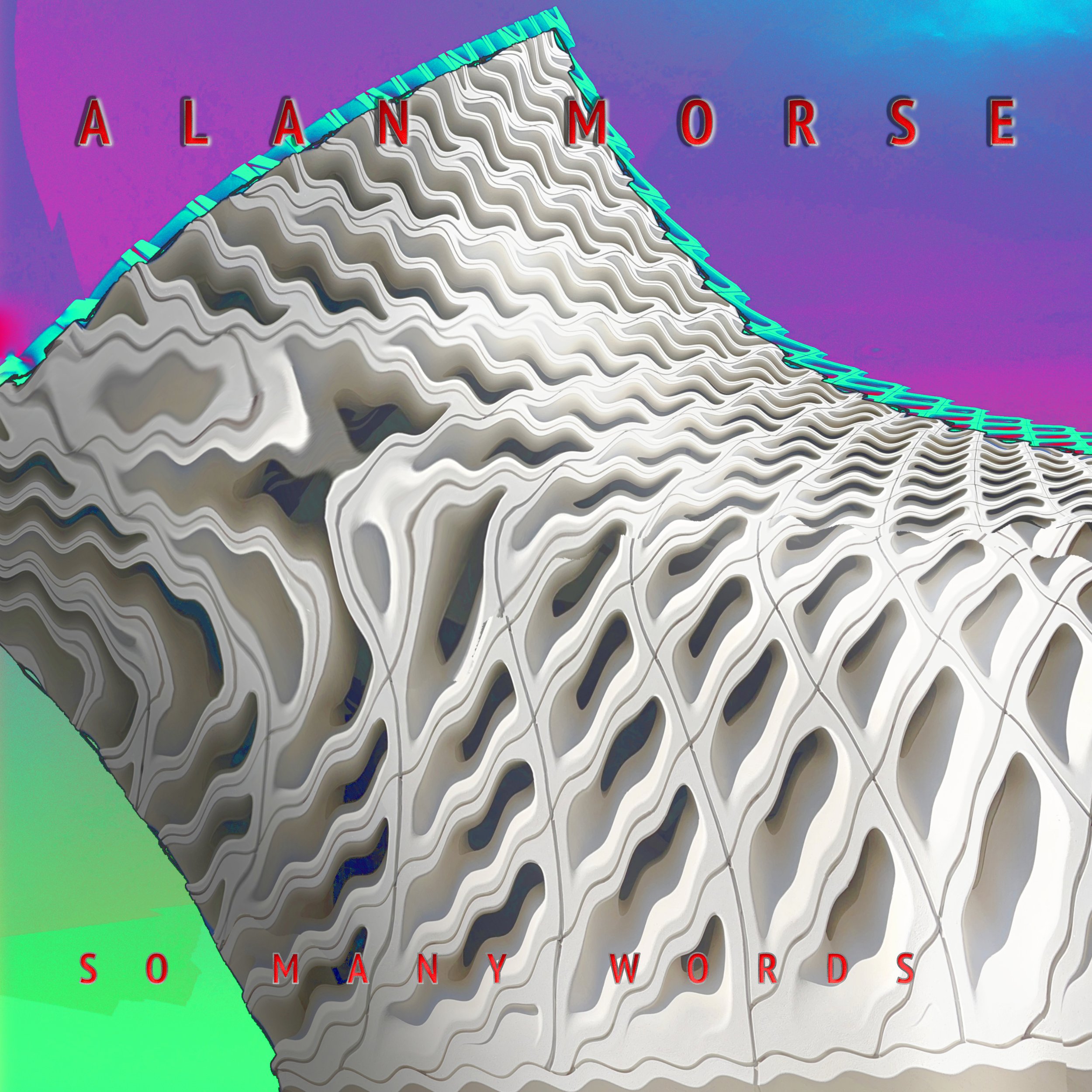
I don’t think that Alan Morse would disagree with my observation that of the two founding brothers of the band, Neal is best known to the progressive listening public, but I, for one, really hope that this might shift with the release of his second solo album, So Many Words, which comes a whole nineteen years after the debut. It is self-released, and available at https://alanmorse.bandcamp.com/album/so-many-words I strongly recommend taking yourself to this page, giving it a listen, and investing in the work, because it is a joy from start to finish.
As you would expect, Morse has invested in top-flight guest musicians, including his Beard brothers, real brothers, Tony Levin, and Simon Phillips, amongst others. What strikes you about this album is how eclectic it is, such a range of textures, moods, influences, and execution, but always deeply intelligent.
There are eleven tracks – let’s get to it. First off, there is a teaser video on YouTube, and this is embedded below for you.
We open with Everyday is Insane, which has Phillips on drums, and backing vocals by Jimmy Keegan and Markus Riegler. The song references Canaan, metaphorically as the Promised Land, with a lifestyle of eight-ball and a bottle of jack, a whirlwind of madness. Morse provides a chugging, almost post-rock growl of a guitar, deep riffs, and Phillips shows his class immediately, the keys providing a bright feel before Morse introduces himself vocally, in a track which develops into a wonderful Americana feast, a sort of Dylan & Mellencamp mesh, with some cutting riffs. A solid start, and you can listen to it embedded to the side.
It’s Never Enough is Alan Morse featuring Spock’s Beard and lyrically references greed. That Gulfstream Five you own and fly about in? It’s never enough – what about a Gulfstream Ten? I like the effects and jazz-infused piano which starts the song off, before the song explodes into life, Meros & Morse providing for some sublime bass licks, Keegan belting out some incredible skin work, and this is essentially a loud fusion track with a wonderful post-punk attitude, certainly as the vocals become angrier and distorted, interspersed with the symphonic soundscapes and harmonies you would expect from The Beard. Morse provides us with a loud and proud guitar solo, and, indeed, throughout his chops are well and truly on display. I get the impression that a fun time was had by all with this one.
I Don’t Want to Travel Time If It Takes Forever must be an early contender for this website’s annual “title of the year” award and is the first to feature Neal (it is a joint composition), alongside John Morse on drums, and the rhythm section completed by the master himself, Mr Tony Levin. Lyrically, I believe this is a song about trying to find oneself, salvation, amidst the noise or temptation of modern life. Cello, sax, keys, guitars all combine with a rollicking rhythm to provide for a deeply satisfying modern commercial space rock song, wonderfully frenetic at times, especially when Domonic Dean Breaux is let loose on his sax. I hear all sorts in here. Late period Beatles, Supertramp, Hawkwind. A glorious noise.
This is Who We Are is co-written by Morse & Riegler. It is an acceptance of a role, I believe; those who protect us, perhaps harking back to less complex times in the plains of their country. I love this track, a gorgeous folk-rock delight, with the use of mandolin, bouzouki, viola, and tin whistle, a song whose vocals are dripping with expression, musically uplifting, positive, Phillips underpinning it all. This is going to be in contention for “track of the year” on this website. It is embedded for you below, and it is worth the entrance price on its own. Gawp in admiration at the guitar bursting out of your speakers as the rock element is taken up several notches. Stunning, and I will also be playing it on this Saturday’s (21st February) radio show.
In the Shadow of the Sun is the second to feature Neal. It is a song about being stronger together, knowing this especially when they are apart, the lyricist (Alan) in the shadow of the sun then. It is instantly recognisable as a Morse composition, and I like the harmonies created underneath the questing vocals of the brothers. A reflective piece of music. If you enjoyed Neal’s collaboration with Jennings & D’Virgilio, you will be all over this track.
And It’s Time follows, with D’Virgilio on the drums, and Alan playing all else. I believe this is a quasi-religious lyric referencing the need for all of us to see, feel, and hear a saviour, his arms around the world, healing. D’Virgilio is, naturally, a terrific fit, and this is a rocker, the moody guitar roll combined with the thundering drum riff making for the album’s darkest phase thus far. Not dystopia, as such, but certainly urgently questing, the heavy psych elements interesting.
Nick stays for Making Up My Heart, which has Julia Morse continuing the family theme joining Alan on lead vocals. It is a love song, the protagonist deciding to stay in heaven with his love, as opposed to straying to the other side. This is a long track in the context of the album, just shy of eight minutes. The vocalists work well together. The song itself takes off for me when Morse produces a vibrant guitar solo four minutes in, the emotion more telling than the voice, in fact. This leads into an extended passage where there is some experimental noise amidst the guitar crying, the drums crashing out of the speaker. A track of two halves, the second soaring.
The title track follows, and this is embedded at the foot of this review for you to enjoy. It is co-written with James Fogg, lyrically, so many words, so much noise, so much slop, drivel, drowning us out. It has a full, rich sound, lots of noise appropriately enough, different instruments and moods competing for our attention, such as the world scenario being described lyrically. So, we have loud, metalesque riffs, alongside mandolin, bouzouki, and electric sitar, the voice at times descending into a sort of Lou Reed commentary. Breaux provides a dystopian, deeply dark, saxophone.
There is an instrumental up next, Bass Solo, with no guest musicians. The bass itself is interesting, some wonderful harmonies created. Amongst that is a whirlpool of electronic experimentation, including those drum patterns which drove many sane men to distraction in the 1980’s. It is interesting, if not entirely memorable.
Make Me Real Again is the penultimate track. It is a collaboration between John & Alan, the former playing drums & rhythm guitar, a woman controlling a hundred voices, holding them in her hand. This is track where the overwhelming sense is of a latent punk/new wave artist finally getting his opportunity to burst out of the stalls and bombard us with a cacophony of dark and heavy textures, the guitar riffs decidedly manic.
We close with Behind Me, a song about leaving the past behind, and moving forward with confidence. The previous track had Ariana Giokaris on backing vocals, and here, she is “vocal riffing”, and forming a choir alongside Eva Prappas. Keegan returns to stool duties. The extended synth-led opening passage is a light counterpoint to what preceded it. Initially, the vocals are those of a tired man, who has been through a fraught, extended journey, but they brighten up considerably when the decision is made to simply move forward. The guitar soars, multilayered, and powerful, and the choral voices then add a gorgeous symphonic top, Giokaris introducing a gorgeous gospel element to the track. A great way to close the album.
There have been some mixed reviews of So Many Words. The easiest thing for Morse to have done would be to do a few songs with the sound of Spock’s Beard as its bottom, middle, and top. Now, I thought last year’s The Archaeoptimist was a decent enough album, but I find this solo effort more interesting, in truth. There is a musician here with a lot to say, a wealth of influences underpinning his work, and not afraid to produce something different. I admire that, and there are a couple of genuine classics included.