
Prolific and talented are two words which best describe John Irvine, and his eponymous Band returns with its ninth studio album, Take Me to Your Leader. It is a first, in that it is an all-vocal album.
Joining John is his drumming mainstay, Andrew Scott, and two vocalists, namely Gordon Robertson and Emma Jean.
There is a taster video for you to watch, and this is embedded below. At its core is still the jazz rock he is best known for, but this time sprinkled with more than a dash of pop-rock flavouring, and John himself states that people who liked The Buggles, Yes, and Supertramp, interspersed with Zappa-esque humour, will find a warm home in this work. Given that this reviewer is an avowed fan of all these artists, a treat surely awaited.
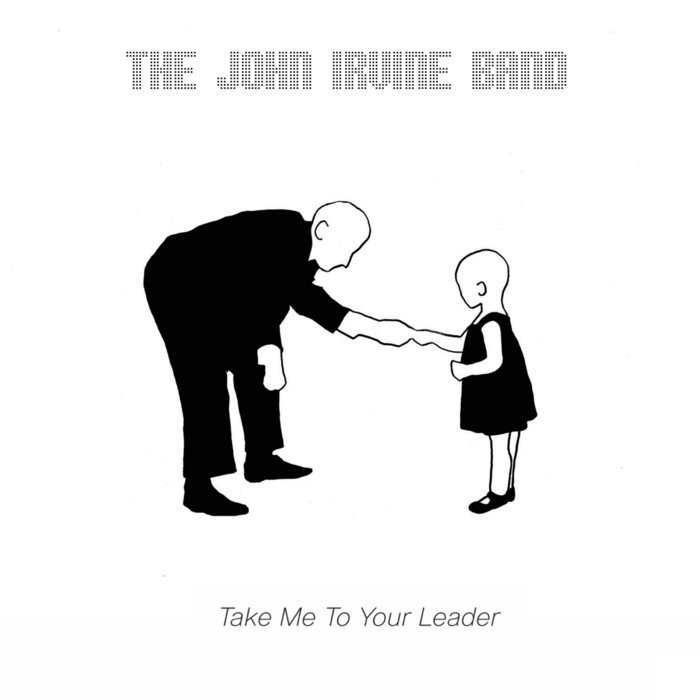
The album is available at https://thejohnirvineband.bandcamp.com/album/take-me-to-your-leader and available in full this coming Saturday, 31st January. I will, incidentally, be playing another track from it on my radio show of the same day. I do, incidentally, really like the cd artwork by Daniel Irvine.
We have eight tracks to discuss, so let’s kick off with Wheel of Time. It references The Mandala, which is Sanskrit for “circle”, with the cycle of time represented by Kalachakra, contemplating our existence, the infinite. There is a warm groove immediately from the combination of Scott’s drums, the whirling synths, and the intricate, yet delicate guitar work, before Robertson takes his initial cue, and his is a voice with range, and the necessary ability to emote. A really good start, with the instrumentation synth infused carrying with it that eternal feeling at once before transforming into something 80’s synth rock fans of acts such as Depeche Mode and the aforementioned Buggles will immediately like, before the guitars and bass join the fray to add quite a lot of intricate depth, especially the classy guitar solo, albeit very short. There are some nice harmonies here as well. A solid start, certainly with an interesting mix of influences and execution.
Chosen One has been released prior to the album and is embedded for you below. It is interesting lyrically, ostensibly referencing a digital game, but I think it is a bit deeper than that, the continual striving to find the perfect leader, who, of course, simply doesn’t exist, so we are forever bound to be disappointed, in an almost childlike state. The guitars and synth are urgent in unison at the start, and by this stage, I have absolutely warmed to the vocal harmonies on display. The guitar is a fusion delight between the ears, and I love the melodic effects which are created, sometimes below the main action, but also rising to the fore. A very catchy track indeed.
It is followed by A.G.I. (Artificial General Intelligence) and is an extremely strong candidate for “intelligent reflection of modern life” award at the end of the year, because it captures perfectly the noise, or should I say NOISE, we are subjected to constantly now, especially if one listens to or watches commercial media in the adverts. You know, “let’s tell you the truth about AI. AI is only as good as the platform upon which it is built”, so choose ours. The invitations to discuss complex commercial or legal matters with bloody chatbots, including, shamefully, by HM Government; the algorithms which flood social media with ads; AI slop, and the deeply cynical attempts by Tik Tok to promote itself as a learning platform for young minds. Musically, it is quite similar in tone and output to the trilogy of albums immediately before this release. It is frantic, and there is a dystopian feel to the dark undertones on display, the vocals joining in during the “I’ll flick that switch and you’ll be mine” passage. A very good piece of music.
Siddhartha (Gautama) – (The Buddha, The Enlightened One) is a noble counterpoint to the preceding track, in which it transports us back to universal truths, the journey through pain and suffering to achieve Nirvana, the sharing of enlightenment, or at least the path to it. As I get older, I find myself increasingly attracted to learning about ancient texts, philosophies, and paths to spirituality, moving away from the somewhat simplistic traditional Christian upbringing I shared with most of my peers in this country. I adore the dramatic, soaking in classic rock, guitar riff which opens this, the synths and drums combining to bring a sense of majesty, and, indeed, the vocals provide that, the whole track a marvellous melding of the rock arena, the electronic studio, the fusion in the underlying chords, the clever mix of the screaming male and sampled female voices, and the commercial radio hit, anthemic and drawing you in to its arms.
One Small Step references the space race of my youth, the incredible misogynistic reporting prevalent, and the inevitable media (old and new) circus turning the brave into nothing more than monkeys in a zoo for us all to gawp at. This is, again, extremely intelligent observation of the human condition. A single-length track deserving of wider FM radio play, for sure, the music moving from stripped back to sweeping to thumping anthem, Robertson’s vocals delightfully playful at times. Huge fun.
Man in the Moon is a paeon to self-doubt, self-soul searching, the quest for the fundamental truths within each of us, our minds always so full of doubt. As we open, the synths and voice are far more pensive than the previous track, a clever and knowing change of mood, and the interactions between the vocalists is a joy to listen to. When the track expands into a wall of sound for the chorus, it does so very effectively before the sampled voice introduces the machine-led doubt standing in contrast to the rather gorgeous human search.
Assembly Line is an interesting commentary on the sheer repetition and mind numbing nature of such work, nothing new, of course, the most egregious example being Ford in the early 20th century, but made even more so by the introduction of robot technology, and I like the reference to the workers breaking out at night, a gang in flight, having a good time, the energy release vital for something approaching sanity against the dreariness of existence, itself necessary to be able to live. It is relentless in the chords, the drums thumping out a pattern, the voice robotic in its insistence upon order.
We close with the title track. It is dystopia wrought large, and similar in theme to the outcome of Here Come the Robots! The aliens are not, as we like to imagine in our nice liberal way, pleasant and prepared to share their superior knowledge, bounty, and love. Instead, their androids torture, they maim, and, in the final irony, the soul is refused entry past the pearly gates by the big android, and it is doing so with a grin. The music ranges from the quietly thoughtful to the altogether frenetic in contact with the big android, it mechanically demanding to be taken to “your leader”, and for sure, the music does reach some shimmering heights on this, and a fine guitar burst introduces the end, mournful at first, and then urgent as the android taunts him beyond death.
This is another very enjoyable album from The John Irvine Band, and I am looking forward to how the vocal relationships started here develop over future works. Lyrically, you are going to struggle to match the intelligence on display; vocally Robertson realises that vision with aplomb, with Emma Jean backing nicely, and I hope she might take a prominent role in future, because the two of them are particularly strong together. The instrumental partnership between Irvine & Scott remains a tight ship, and there are so many changes in tone and mood to satisfy those lovers of eclectic progressive music.
A final word on this review itself. Bloody “Co-Pilot” keeps inviting me to allow it to edit my work.
No.
Sod off.
I am perfectly capable of writing a review without “your” help, thank you.
I do believe that Mr Irvine would approve of such sentiments!