Asia entered the rock public’s consciousness 44 years ago now, with the release of their self-titled debut, and it is fair to say when I saw the news in Kerrang magazine, I was salivating at the thought of Wetton, Howe, Downes, and Palmer recording and touring together, all of them musicians regarded by my younger self as akin to gods, and I include Downes in that, incidentally, because I adored Buggles whilst extremely tepid, to say the least, about Drama as a Yes album without Anderson, and the breakup of that iteration of the band, to my younger mind, fully justified that critique.
It is fair to say that many progheads loathed that Asia album. From my viewpoint, in an early example of the oppositional, cantankerous sod I was to grow into, I loved it. I still think that album is one of the finest pop/rock albums, with a wee dose of prog, ever released.
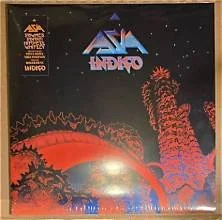
Come 2026, the latest iteration of the band, now with only Downes as an original full-time member (Howe guesting on one track as a sort of blessing, I suppose), Indigo is released via Frontier Records, their (it is challenging to be precise here) 13th official studio album, and before I delve into any great detail, I think in terms of the progressive rock fan reaction, there will not be a great deal of difference in the 44 years mentioned before. You will either really appreciate it or hate it. A Marmite band, indeed, although in the wider commercial world, it must be said that the lovers vastly outweigh the haters.
The personnel.
On guitar, one of the finest of musicians, and songwriters in the modern rock world, who I was privileged to interview recently, John Mitchell, who is a very busy chap indeed, and if you go to the link below to that interview, you will see he is fiercely protective of his friend, Mr Downes.
On drums, we have a killer skins man, Virgil Donati, he of Planet X amongst others, and he is memorable on this.
Downes has recruited Harry Whitley on vocals and bass, originally for a memorial concert to John Wetton, and now front and centre as, I assume, a permanent member. He hails from North Wales and had played several Asia songs on his own repertoire, bringing him to Downes’ attention. It is reasonable to say that you can see the similarity between his and Wetton’s vocals. Whitley has precisely the same tone, timbre, delivery, and I like it. He has a YouTube channel, and if you put on non-Asia videos, you will see this is his natural voice (I rather like his version of Temporary One, so much I have embedded it at the foot of the review).
As for Downes, he is too well known for a pen picture, so I am going to confine myself to saying this: Without going into the virtues, or otherwise, of Yes continuing to record and tour without Jon Anderson, the main thing that has struck me about recent albums is just how low in the mix Downes and his keyboards are. There are times when you really must check that he is still a member of the band, and this is to the band’s detriment, because he is a damned good player, having a lush range of styles. Thankfully, as might be expected, he is at the core of all that is good on this album.
Indigo is not a purely progressive rock album. It is an Asia album in the tradition of that classic Asia sound we found on the first couple, and the reunion albums, which I thoroughly enjoyed, so pomp rock with progressive sensibilities. It is superbly performed, produced, and packaged, and worth every penny I paid for it.
There are thirteen regular tracks here, plus one bonus track featuring the mighty Mike Portnoy on drums, covering some 65 minutes, so a lot to get through, and what I will do here before providing a summary of the songs is to state my only real negativity about the album, and that is, it is probably a couple of tracks too long – a couple of them do feel like filler, and I suspect that a private discussion with the participants might well confirm that.
We open with The Traveller (Into the Light), and this is one of three videos officially released that I have embedded for you to enjoy directly below this paragraph, the other two being Arcadia and Echo of You, so we will deal with all three here. It all opens with a wall of sound, referencing space travel (a favourite subject of Mitchell’s, of course), and as soon as Whitley sings, you can see precisely what I mean about his similarity to the great Wetton, who I never thought could be replaced, and am thankful he has been. There is a great synth solo, there is a great solo from Mitchell, and the rhythm section acts exactly as a solid rock outfit should sound. A track that could easily have fitted onto the original, and a very welcome strong start to proceedings, the sound of a band absolutely comfortable in each other’s presence, the jam moving into the final passage delightful, and those closing notes from Downes? Pure prog, my friends.
Arcadia is a track I played on my radio show last month as (I believe) the second pre-release single. Deep and dark as it opens, Donati lets rip, Mitchell adds a fine burst, Downes creates those magical soundscapes before the lush piano I have always enjoyed hearing from him. The title refers to a Greek province which later philosophers equated with harmony, or in the song’s words, “where the broken hearts are saved”. When I referred to Downes being low inn the mix with Yes, this track is a shining example of where I think they go so wrong, because the performance here is delicate, emotional, and reflective of the pastoral vision sought after.
Echo of You is the final regular track on the album, and is a fine Downes & Whitley song, the video tracking them on the road, and clearly referring to the “ghost” of Wetton permanently with them, in a positive fashion. Incredibly catchy, and extremely good pop/rock.
Review of the original debut at https://lazland.org/top-ten-albums-by-year/1982
Indigo available at all good outlets but see https://frontiers.shop/products/asia-indigo-cd from the label itself.
So, those are the videos. Let’s move on now to the genuine prog epic on the album, with three parts to the Tattoo Indigo Suite, adding up to a fine eleven of minutes of music, and sure to be a contender in this website’s “epic of the year” award at year end. Parts 2 & 3 are credited to Wetton & Downes, with Whitley adding his name to Downes for Part 1, a rich instrumental, and suddenly you are transported back to the 1970’s, a glorious fusion of heavy prog, classic rock, and symphonic music, the organ centre stage, a rumbling bass, Donati having a royal rumble on the skins, Mitchell solid in his riffs with a nod to Howe in the closing notes, a track as cinematic as anything you will hear in 2026. Part 2 starts with a pastoral flourish, the backing vocals creating nice harmonies, a short piece which gives way to some thundering Mitchell solos in part 3, interplaying with some deep Downes synth work, the whole room filled with sound, the lyrics bittersweet in our memory of a fine musician, the close a Cossack procession of noise.
Change of Heart is a Downes Braide piece (note to self – I must reacquaint myself with that duo’s music), and is a decent rock ballad, the “whoa” lines and pockets of Downers synths clear nods to passages in the debut album, and Downes reminds us just how good a pianist he is.
Is This the Life? has a theme looking backwards and forwards, a sort of Janus emotional arrangement, and the type of track Asia surprised us with back then, but familiar ground now, a pop/rock similar, in fact, to much of the later singles Genesis released near the end. I like it - pure progheads will be reticent but should set doubts aside to appreciate the class musicianship on offer, including a fine Mitchell riff that is sadly far too short.
Life in the Sun is for those of you deliberating whether to up sticks and leave wet, windy, and cold Britain and join those brave expats in warmer, “better place”, climes. Don’t regret the wrong (staying) decision like the boys here! There are some bright guitar bursts on this one, particularly the solo leading to the denouement. Mitchell really is in fine fettle at the moment.
Hymn for the Fallen, as you might imagine from the title, is a poignant discourse on those brave souls who made the ultimate sacrifice for those of us who remain, and as I write this review, it is a few days since we fell silent in remembrance. The interaction between voice and synth to start is solemn, and there is a beauty in the sad vocals and piano/synths as the song moves into its main passage, utterly respectful of its subject matter, as is the closing guitar lead. This track is a true highlight of my 2026 listening year, intelligent commentary set to rock music in the finest traditions of both.
Night and Day discusses the fact that love can be both reckless and cruel and is a shortish rollock through the fields.
Valencia (The Ghost Ship) is fascinating, telling the story of the SS Valencia, which was wrecked off the west coast of Vancouver Island in 1906, and killed 100 people, including all the women & children aboard. The lyrics reference the ghost ship trying to come home from the rocks of Pachena, and this is a thoughtful song, Downes masterfully creating the ghostly mood, and the piece is closed with the short instrumental An Elegy, beautifully symphonic.
Mr Howe features on Chesapeake Bay, which is an estuary (the largest in USA) on the east coast. Wetton is again credited as a co-writer here, with Downes & Whitley. It’s only three minutes long, but it does do quite a lot in that time, essentially a slab of Americana from Howe, whose talent always shines through, and the piano is simply gorgeous. A lovely piece of music, which is there to take you to a peaceful place, no bad thing at all.
On a Winter’s Night is the second of the Downes/Braide songs but lyrically leans more to the Anderson view of the universe. Chuck in some McCartney-esque “na, na, na’s”, and we discover Asia’s inner hippy. Nothing less than a cheering slab of rock music, again no bad thing, and there is a great church organ burst to finish us off.
I would place this album in the top tier of releases from the band. The recruitment policy by its guiding light has been intelligent and well thought through, and I sincerely hope we hear a lot more from them moving forward. Really enjoyable music, and we must celebrate Whitley’s emergence as a songwriter of some note on this evidence.
Personnel:
Geoffrey Downes - keyboards
Virgil Donati - drums
John Mitchell - guitars
Harry Whitley - bass, vocals
With:
Steve Howe - acoustic guitar (11)
Mike Portnoy - drums (14)