In 2026, not many artists in progressive rock can be designated as cultural icons with a media presence outside of websites such as this, or outlets such as Prog magazine. Those days are pretty much long gone.
Steve Wilson is one such artist, and Requiem for a Village is his tenth solo album.
I think regular visitors to this site know my opinion that his output since Insurgentes in 2008 is preferred here to any of the last couple of PT albums prior to the interregnum, and, indeed, Closure/Continuation, the (partly) reformed outfit in 2022.
It is a fact that this sort of commercial success leads to accusations in certain corners of the progressive world of “selling out”. It comes with the territory, sadly, but one of the more puzzling criticisms of this album is that it “sounds like a Steven Wilson album”, especially coming from the self-same “critics” who had decried the “commercialism” of To the Bone & The Future Bites. From my perspective, I rather welcome Wilson sounding like Wilson as opposed to the blatant plagiarism (sorry, “tribute”) witnessed on The Incident. It is also a fact that, just as later-era Genesis was a gateway for many into the more prog past of the band and their peers, Wilson performs the self-same service now. It is vital. We need to remember sometimes that artists who cannot make any money usually end up not making any music.
Anyhow, rant over. Before discussing the album, Wilson released an official video Requiem for a Village “The Village Hall Sessions” a couple of months ago – let’s take a look at it here, with a special mention for Russell Holzman on the drums, the second mention for him on this website this month (he plays on the superb Datura Lodge album) and the classy Randy McStine on guitars. This is a staggering mix of the psych, the harder rock, the fusion, the dense art rock. It is intelligent and quite unlike anything that listeners to the bulk of radio stations out there in the wide world will have experienced. It is progressive rock at its zenith, in my opinion.
Wilson has again used his friend Andy Partridge to write some narration, and in a wonderful coup, had it voiced by former Dr Who, and one of the UK’s finest actors, David Tennant. And where do the narration and lyrics take us?
I live in a Welsh village not dissimilar to the size of the place Wilson sets out here. The official census shows some 1200 souls here, but that includes three separate villages (to us), and it is in fact nearer to about 600 in the metropolis of the Gwendraeth Valley.
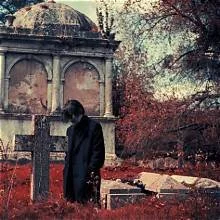
The album title itself was taken from an obscure 1975 British horror film, directed by one David Gladwell, who is still with us in his 90’s. It revolves around a chap tending his village graveyard, with the inevitable sequences of its inhabitants rising up, against modern life encroaching upon their bucolic idyll. I feel their pain – as part of the Welsh Government’s housebuilding programme, we have 43 new homes being built here right now (yes, overlooking the graveyard), and it has not been, ahem, universally welcomed. But this is not a straightforward concept album, rather bringing together varying strands associated with the rural, small, way of life (cleverly as opposition to the vastness of The Overview). So, as reference points, we have villages in the original (and superior) The Avengers; the village in children’s ITV yarn, Children of the Stones; Portmeirion, the Italianate village in North Wales where they filmed the (altogether 1960’s weird) The Prisoner; and, naturally, this being a prog album based upon village life by a supreme prog artist influenced by the supreme prog collective, King Crimson, we have Under Milk Wood, the Dylan Thomas work familiar even to most English students, which was in the main inspired by the village of Laugharne, Carmarthenshire, not far away from where I live, amongst other locations where he got solidly pissed.
Now, speaking from a rural perspective, there is always a danger when metropolitan raised artists such as Wilson write about village life that it descends into caricatures of the straw-headed yokels, illiterate farmers yomping across fields, and, in horror tales, flesh-eating witches. Wilson avoids this and therein lies the genius of the themes he has drawn together, a pastiche of mild horror and observations, especially the fact that life here is just as challenging, complex, and revolving around strands of humanity as everywhere else. “They say if you enter, you’ll never come out”.
In parts, the album, which has a running time of 54 minutes across twelve tracks, does remind one of Hand.Cannot.Erase – good! That is one of the finest albums ever released. It does this with hints of that fine work, ghostly reminders, if you will, and I think done quite deliberately in the context of the past rising in defence of its legacy. However, we must contrast this with some of his heaviest work outside PT. Also, how good is it to hear the tones of an analogue synth?
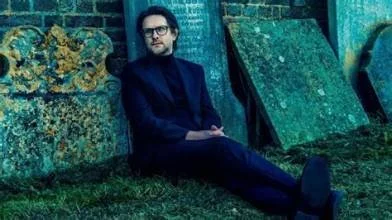
So, let’s have a pen picture of this musically, especially for those of you yet to invest your hard-earned.
Wilson is the most adept of modern artists to create atmospheres. The somewhat expected peel of church bells kicks us off in a Swirl in a Lark’s Eye, but that is superseded by a magnificent drum burst by Holzman, and Tennant gives us a tear in a quail packed quilt. The village is alive. This all segues into the title track, as per the video above, the Wilson choir voice introducing us to something altogether heavier, and close to some of the finest PT-vibes, the riffs at times rumbling, then piercing, then crashing, the effects swirling around the analogue nightmare of the dead rising, in the spot where one lost one’s virginity (it is the attention to small detail which matters here), and I must refer to some incredible bass guitar work by the maestro on this, with a staggering guitar solo by McStine. Minimalistic cinematic music (twisting my metaphors, I know), a Radiohead Kid-A set of noises to finish.
The Same River Twice is Partridge at his most poetical in a shortish piece, notable for its dramatic use of mellotron, never a bad thing in progland, of course. The closing synth noises are not cheering, introducing Tennant telling of the cheerful village mask hiding the darker underbelly.
Now Departing signals the beginning of the main section of the work. We have moved beyond the introduction, and are in a world of weirdness, something akin to those halcyon days of the 1970’s when experimental meant doing what one wanted, a kaleidoscope of noises against pure melody, interspersed with mean riffs, all the time the dramatic landscape increasing, very much in parts familiar to those acquainted with Wilson’s work, especially the clever manner in which he does this with irresistible grooves. It moves into Hiraeth, which is a Welsh phrase for missing one’s home with a deep longing, and recreates this with mournful piano and slide guitar, a touch of Americana, apt because Thomas famously died in New York.
On Chapel Slope has an official video embedded below for you, and features violin from Wilson, but this is a dissonant sound. The church bells and choir return, and you would be surprised just how many isolated chapels like this exist across the country I now call my home, calcified stone everywhere, and here you witness that caretaker, witnessing the rebirth of the inhabitants, supposedly laying still in the cold ground. This is easily a contender for video of 2026 (it has been a good year for the visual portrayal of progressive music). Brilliantly moody, and a great example of how to portray coldness without gothic explosions of noise, merely the use of multiple voice and old fashioned mellotron. Superb.
Next to the title track, Murmuration is the longest here, just over seven minutes, so no epic-length songs, instead a work which needs to be heard as one long piece. Tennant narrates the tiny people below, and this is how the villagers should be viewed, as starlings in the grand scheme of existence, flocking around each other, one step forward, two steps back, and it is deceivingly pastoral in its acoustic gentleness when set against the subject matter. Does God look down upon us so? If you enjoy lush music in the manner of BBT and classic Genesis with a dark underbelly at its heart, then this is a highlight of the year for you. I would have liked to have heard more of the seductive closing voice of Katherine Priddy.
Cursus Fingerprint follows, and these are ancient (Neolithic) ditches, so Tennant refers to the giant white horse on the hill, and you imagine yourself standing in the field where the ancients danced, sacrificed, ritualised the world around them, and it was dark, a struggle, the voices and music portraying this expertly.
A Basket of Bees is brighter with the dancing acoustic guitar and a gorgeous passage in which we get a combination of fret instruments, this giving way to something altogether more pensive, the disturbing noises jutting out amongst the oppositional guitars.
Great Green Map has Tennant wondering about what was, and the threat that once you enter, you would not come out, the need to leave old superstition behind, the brass giving that sense of days past. Things were so much better then, yes? Well, no, life was hard, and initially, the WAW soundscape, which is simply beautiful, lulls us into that false sense of the past being used as a weapon for moving away from our disturbed present, before it comes alive to hit you hard. You can’t leave – the train will simply bring you back to where you started, and the mood darkens considerably with Wheel, which I have seen referred to, rightly I believe, as a tribute to how Townsend was so adept at bringing you unexpectedly into the darker recesses of his mind, and Holzman does a mean impression of a Moon with his crashing skins. The voices descend into the very pits of your worst nightmares, the guitar and bassline working to disturb what is left of your peace, the pace picking up considerably as we start to consider whether The Old God is Buried, where to start, Wilson commits that most modern of prog “sins”, using a drum machine. The world is spinning coins which the poor cannot afford, but are, of course, encouraged to do on a persistent basis by those commercials, Mammon now running our lives.
So, there we go. This is not an album to make an instant judgement on. I have played it daily since release date, and it gives up more and more of its intricacies and narrative each time. It is as intelligent a statement of modern progressive music as you are going to get. As I finish the edit for this review, I see that, somewhat expectedly, it has won the Prog magazine critics choice of 2026. Now, I know there are those of you out there who would state that had Wilson released an album of Taylor Swift covers; he would still have won that crown. Maybe. But I tell you – this is a magnificent achievement from one of our finest.
He is to be celebrated, not scorned.
Available to purchase from all major outlets, but direct from artist at https://store.stevenwilsonhq.com/products
Personnel:
Steven Wilson - vocals, violin, oboe, drums, guitars, bass, keyboards, sampler, percussion, programming
With:
David Tennant - narration
Andy Partridge - narration
Randy McStine - guitars
Russell Holzman - drums (2,4,9,11)
Katherine Priddy - vocals (7)