As one gets older, it is easy to fall into the trap that anything produced in modern times is awful, cannot touch the classics of one’s youth, and, generally, we are all going to hell in a handcart. In the UK, this could be described as “Victor Meldrew Syndrome”, after a very popular sitcom. Easy, yes, but wrong.
It is, in fact, enough to merely state a name at our tribe of Victors. Tom Penaguin is that name, a young artist, nurtured by the superb áMARXE, who now treats us to Tom Penaguin II, six brand-new tracks including a monumental suite in four movements (my reviews of his previous works can be read by clicking on the buttons below).
It is, frankly, genius. Let’s discuss.
We start off with the runaway favourite for the “title of 2026” award on this website, namely Didier Dandelion in the Year of the Great Winds. At 13-plus minutes, it is a massive statement of intent to start off with as well. The scene set is utterly bucolic with birdsong and swirling wind before we get a guitar solo of boggling complexity leading into keyboard wizardry with a dizzying array of gear used. The whole piece takes its cue from classic Canterbury fusion of yore, the Fender Jazzbass and Yamaha drum kit keeping everything going in the melodic and pulsating senses, the foundations never letting up beneath a wave of sounds from the keys which are mesmerising. The seven-minute-mark sees the tempo reduce, a melodic bassline and some gorgeous pastoral sounds coming from the speaker, the great winds perhaps having now subsided, with life catching its breath and reemerging from the chaos, more dextrous guitar work making its mark before the final passage of music sees Penaguin rocking out on the Gibson, and backing himself with such a wall of sound it is hard to believe this is all the work of one man. An astounding epic, a joy to listen to, pure rock delight.
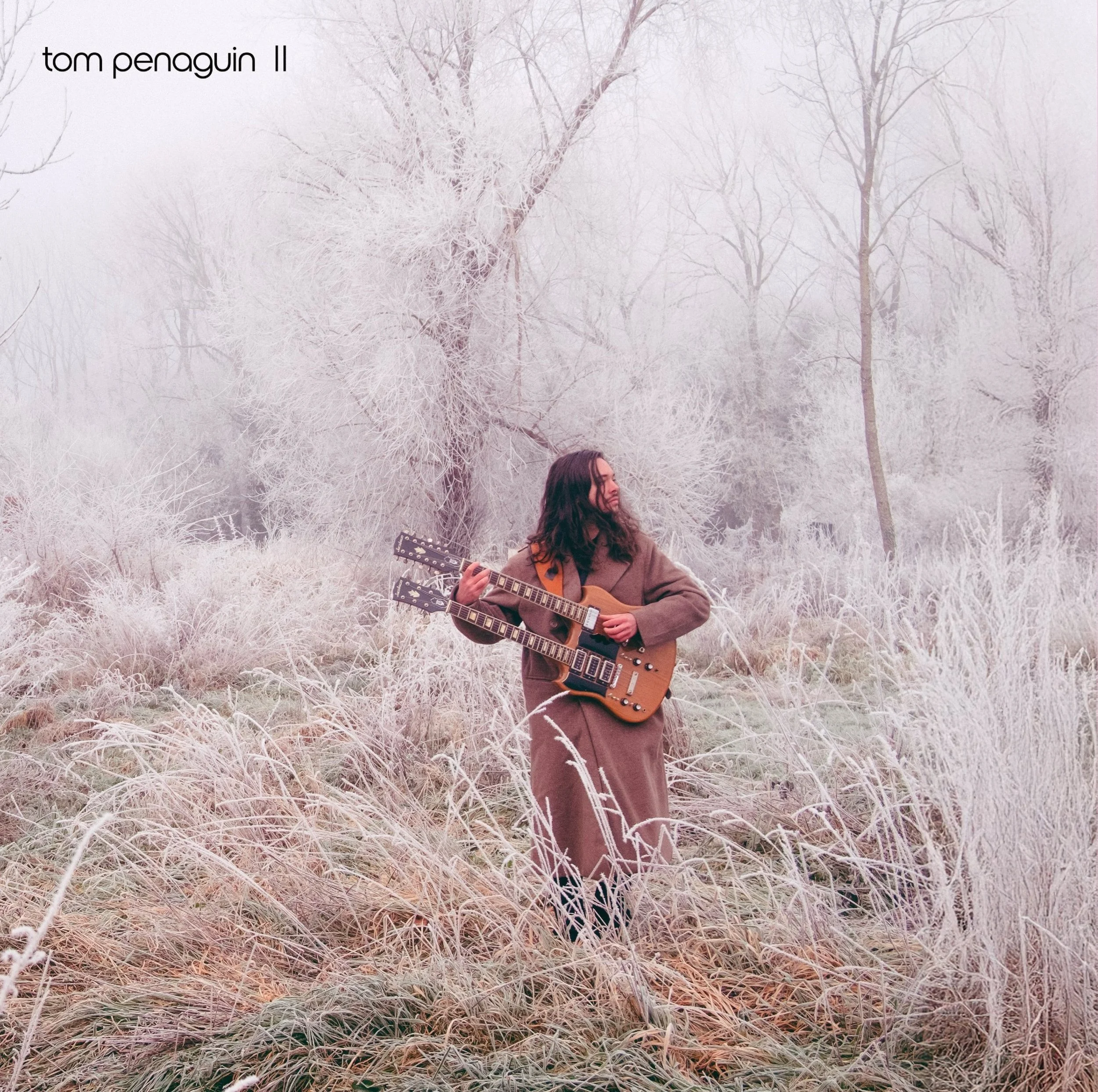
How do you follow that? Well, with a Mandatory Intermission, this lasting over three minutes. There is some more clever guitar work here, this time on the double neck seen on the cover in improvisational harmony with the Rhodes, a gentle rhythm led by more melodic bass.
This effectively serves as the introduction to the suite, entitled The Ornamental Hermit Suite. Four movements encapsulating almost half an hour of music. I am playing the second movement on my radio show this Saturday, but I am hoping that my friend and Progzilla Radio colleague, John Simms, could play the entire suite on his “Epic Sundays” show, which airs when there is a fifth Sunday in the month, and has three hours of the longer form of music.
Ornamental hermits were men hired by wealthy landowners. They lived in isolation caring for bridges, wells, rockeries & etc. Their employment was a short-lived craze in the 18th Century.
Some of the first movement takes me right back to Phillips-era Genesis, and is a curious mix of early symphonic leanings with pastoral folk rock and delightful bass-led fusion. It is noticeable how Penaguin can use notes and effects sparingly to allow the listener space to contemplate, and we then have some gorgeous voice provided by Maureen Piercy (also responsible for the artwork).
The second movement is bright and breezy at the off, the unmistakeable imprint of The Hammond there, some great use of jazzy percussion, before the Les Paul starts to sing at us. By this time, it is easy to become somewhat complacent about what you are hearing, but when you listen to the two movements I have embedded below for you, I am sure you will agree with me that the standard of multi-instrumentalism is unmatched by anything heard since a young Mike Oldfield entered the consciousness of the music world.
Movement three marks the lonely work of the hermit, Hammond concentrating on the task, the silence broken only by the beating of tools or appendages, these being the bass and drums going about their work, and it is almost funereal, as if the life of the isolationist taunted him, made him wonder whether there was more to life, whether it were a wise choice, before the bass and drums take the tempo up several notches, and the organ then becomes playful, perhaps the life choice taking precedence with contentment, watching a fayre at distance, for example, without having to actively participate.
The final movement is epic length, so the second on the album. The Hammond again leads in a downbeat fashion, as if you are sitting in a church anticipating the sermon to come, but then the musician’s ability to up the mood and tempo is seen again, some bright and breezy guitar work accompanying the piano, with the full gamut of keyboard gear utilised in the album coming together as an orchestral fusion whole, the bassline stunning, the drums complex, the movement veering from the sound infused to the sparing, both equally effective, at times the music moving into joyous funk territory, at others spacey psych, some of the guitar work so heartily joyous to listen to, here like a young Allan Holdsworth has taken Penaguin over by some temporal shift, it is that good. The church bells peel out at the end, the adoration of God reaching out to the hermit’s shelter. Simply incredible, really.
This album is an essential purchase for discerning music lovers who wish to be witnesses to the development of a supreme talent, one that will hopefully be around to delight us for many years, and I fully intend to still be expressing that delight when I enter my actual dotage. Bloody kids? Bring him and them on!