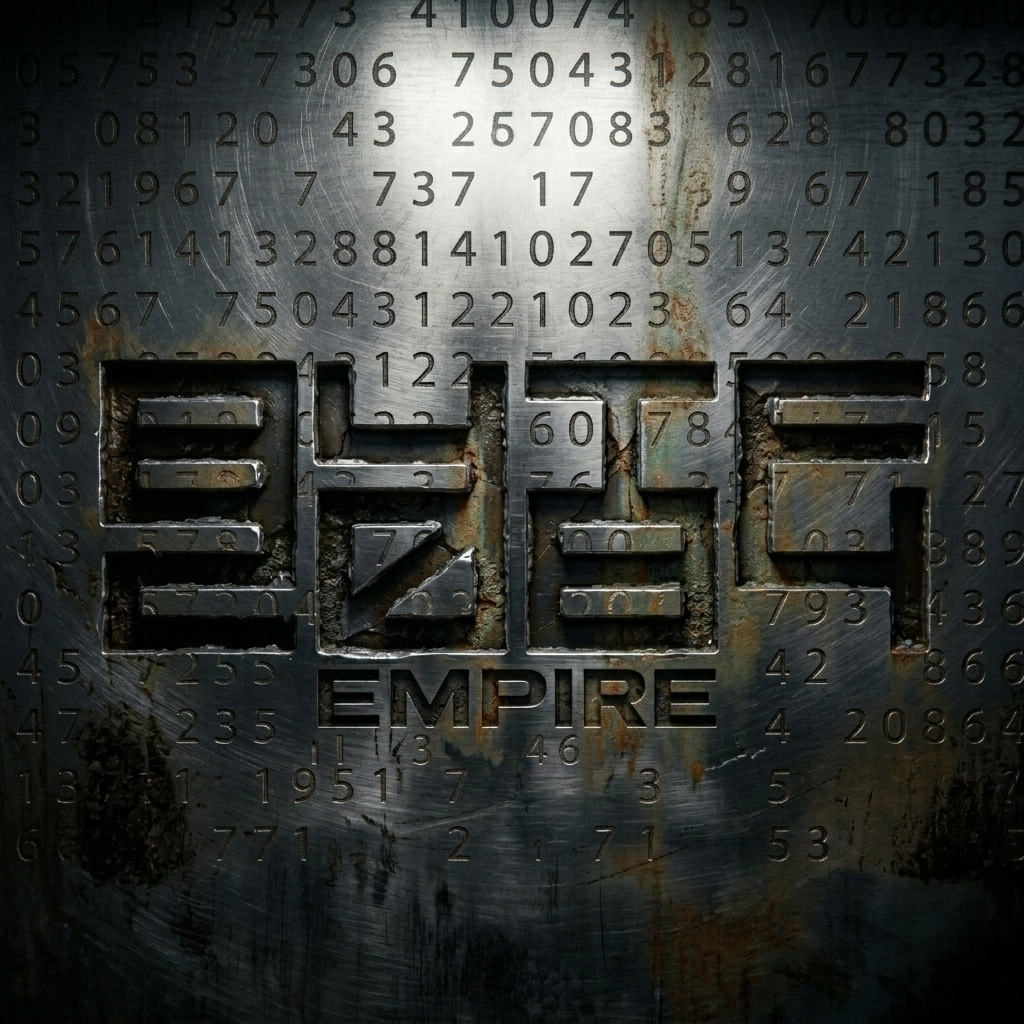
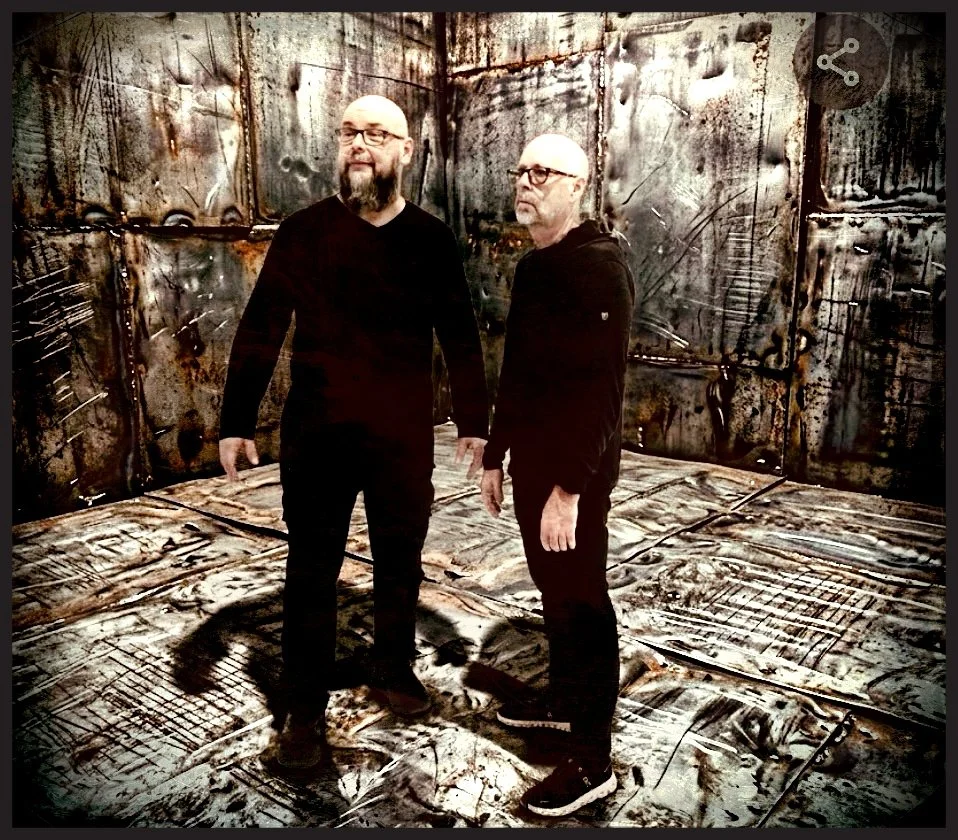
American duo, Built for the Future are a favourite of this website. If you go to the “interviews” section of the website, you will see a detailed discussion with Patric & Kenny ahead of the release of the first part of their trilogy based around Orwell’s classic political dystopia, 1984 with 2084: Heretic. The review of the album itself can be viewed by clicking on the button below:
The 7th of June sees the release of the final two parts, but as a double album, 2084: Empire. It includes one of those huge mega-epics which has true prog rock fans salivating in anticipation. More on this later!
Before discussing the music, it must be said that Farrell & Bissett are rightly very highly regarded in the progressive music world; they are warm, very talented, and transplant their emotions into all the music they release, and if you like sweeping music influenced by the likes of Rush through to Tears for Fears via The Floyd, then this is a definite project for you.
The genius of Orwell, of course, was his ability to publish timeless themes. 1984 feels as relevant now as it did back in the day, sadly applying to many democracies we live in as well as the ghastly strongmen-led countries still seeking to assert their dictatorial “values” over us. Attempting to take this template and make it musically relevant in the 2020’s is ambitious, to say the least, and the danger is that such projects can disappear up a backside of pretentious smoke – that B4tF avoid this is a testament to them, and I think this trilogy is a very important modern cultural landmark in our musical world.
The duo is joined by Peter Fithain on keys, and Lalo Herrera on drums. Patric is responsible for bass, guitars, keyboards, drums/programming, and vocals, whilst Kenny is the lead vocalist, and plays guitars and keyboards.
So, ten tracks across a double CD. A huge amount of music to discuss, so let’s provide you with a flavour of happenings.
First off, let’s consider some official videos. Firstly, the trailer, and we also have the two singles released in advance of the album, The Empire State (power pop/rock with some wonderful rhythm guitar work) and Propaganda (a thumping rocker). I will be playing the latter on my radio show this coming Saturday, incidentally.
You will note from these the power and feeling inherent in the music presented to you.
Lyrically, the album is faithful to the themes explored all those years ago – the loss of self in the authoritarian world which befalls thinking people, minds numbed by relentless propaganda, the constant sense of fear ingrained by so-called enemies of the state (both external and internal), drills sending you underground in preparation for the always impending apocalypse, the expectation (and many do so quite willingly) to lay down not only your hearts & minds, but your very existence for the state, but, for those faint of courage, the acolytes are always there to “guide” you, the existence of citizens who zealously do the state’s bidding by reporting on any transgression, the state as provider, as parent, as redeemer, constantly at war, but your only protector against the outside.
From the very first notes, and thence voices, the anthemic overlord is wrought large, but also the despair of those who query what is being lost under the constant surveillance. I have always liked the band’s ability to fuse the core heavy prog element with more commercial overtones, and in this, they are very similar to Rush in the post-Hemispheres decade and a bit (my favourite, incidentally), although they do take things further – witness the distinct post-punk vibe in the (necessarily) dark Subterranean, some of the guitar bursts deliciously dystopian, the close surrounding you in the gloom, bells summoning the citizens, quite superb. Then, the first epic of the album, Airstrip One, a track you can easily imagine early Ultravox creating now if they had survived, the choral impact utterly dark, supplicants in their masses worshipping, obeying, believing, the historical, present, and likely future human condition wrought brilliantly large in a mass of sweeping Orwellian music. Zealot is unbelievably catchy, almost dance driven in its description of the true believers marching in line and columns, worshipping every word the Ministry proclaims.
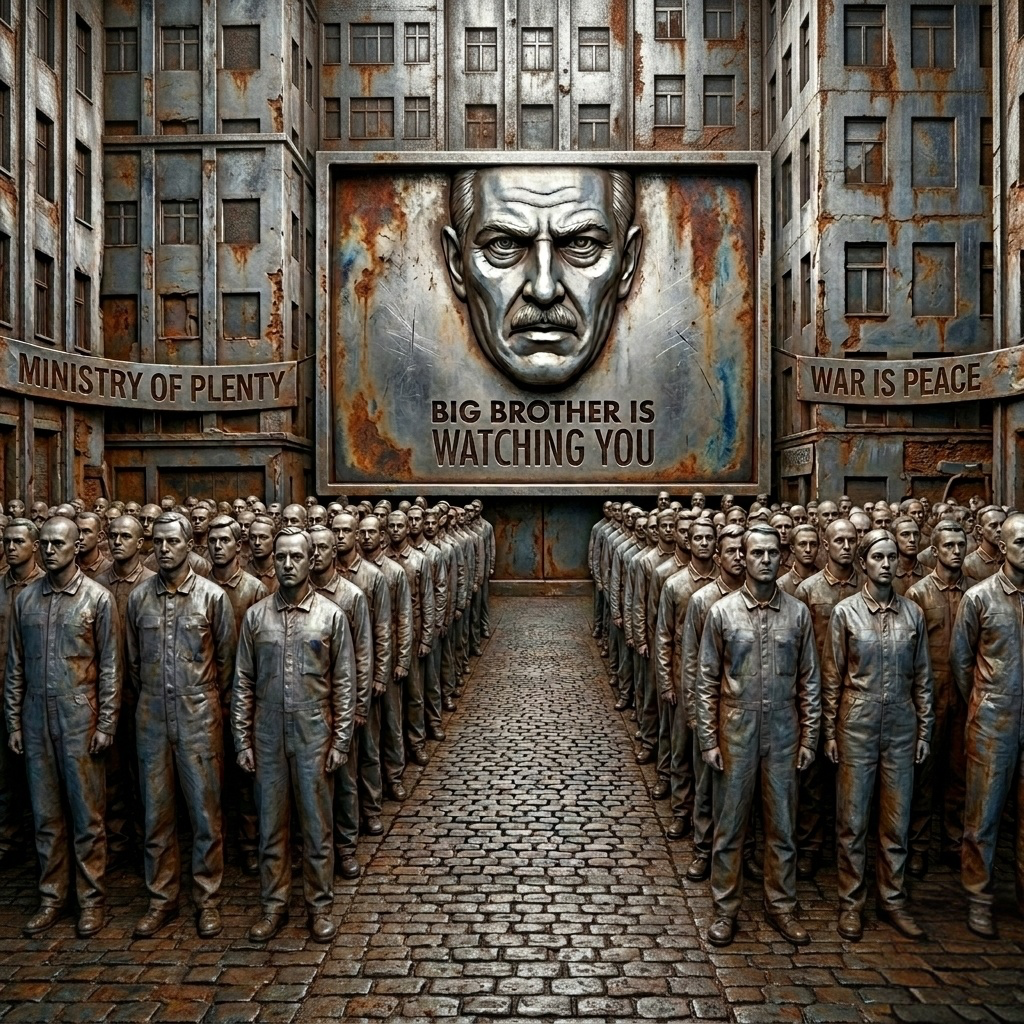
Since this website’s inception, it has provided an award at the year-end celebrating the mega-epic, those tracks in excess of twenty minutes, guaranteed to send the true prog aficionado’s pulse soaring, named after the Yes triumph/disaster (delete according to taste), the Topographic Ocean award, and B4tF come in with what can only reasonably be described as a strong contender, the centre point around which the entire album revolves, I think. Oceania is over 25 minutes long. It is huge in scope, starting off with a pastiche on 60’s Summer psych rock, the Ministry of Love. The Ministry of Plenty counterintuitively is minimalist to begin, but the keys add a huge dimension to the sound above riffs, voices, and a strong rhythm section, the bass particularly strong, the vocal harmonies adding the feel of the collective, the riffs eastern mysticism interesting. Population Control has a relentless beat, and I love the percussion programming on this, an exceptional extended instrumental passage where the guitar riffs creep up on you almost unnoticed before we are presented with a wall of sound, symphonic rock competing with dark orchestral movements. Ministry of Peace takes on a more pastoral hue, some pleasant flute amidst the wreckage, the promise of war. Ministry of Truth then takes over, Farrell’s bass taking the lead Squire position so effectively, the powerful chorus providing doubt in The Machine’s messages, the entire population all alone in the face of “truth”. It leads into the closing segment, Ministry of Love II, initially seeking hope, love, a call for a return to life, but the guiding, all powerful, decision-making state reasserts itself with a vengeance, the effects swirling around your head, the lonely voice bemoaning the inherent desultory feeling of lost individualism amidst the state machine, which comes to life, and “love”, in a fanfare of synths Emerson himself would have been proud of.
Right. Draw breath. That was a massive slab of music, and it never lets go of the listener, not for a second.
There are two tracks remaining, Permanent War with its relentless and mighty riffs, including some post rock sensibilities, and National Anthem, the final victory of Oceania, and the final declaration of love for state and people, a single entity dedicated to the common good, this again transplanted into that 60’s Summer of Love psych, itself an inversion of the bleak austerity of Orwell’s time, so life, music, and humanity coming full circle in a contradiction of itself when the riffs turn dark and threatening, a huge noise created. Hail Oceania. We the People. The fanfare is dictatorial splendour in a nutshell.
Is it possible for an American band to capture the essence of a quintessentially English observation of societal politics? To portray in a modern setting the (hopes and) fears of a post-war generation utterly traumatised by conflict? To intelligently transpose the dreams of a loving, blanket state with the reality of dictatorial surveillance? All this, in a sprawling album managing to keep the discerning listener’s attention throughout, without diversion?
Yes, on all counts. 2084: Empire is an unmitigated triumph, a powerful, supreme work of art which will linger long in the memory. I cannot recommend it highly enough.