
Lazland
Hi, Andy. Thank you so much for giving up your time to speak to me.
Andy Tillison
Nice to meet you, Steve.
Lazland
We met briefly at Fusion, and said hello, but there was so much going on that evening.
Andy Tillison
It was a crazy weekend!
Lazland
Of course, there was the power cut hitting the venue for a good hour at the start of the day.
Andy Tillison
Yes, we finished way, way, way later than we should have, you know. A fair few people had had enough of the day and gone home even before the band before us had played. It was very, very late.
Lazland
I am so glad that we stayed. And I am given to understand that the final encore was especially for quite a special fan who very sadly passed away not long after Fusion, and he was there especially to see you and to see the music that was being played.
Andy Tillison
Yeah, I did find out about that, and that was also clouded by the fact that, immediately after the gig, one of the band's parents died the day after, so, we were pulled into that world, so, yeah, it was quite a sad occasion.
Lazland
I must say that was one of the finest sets I've had the pleasure of seeing.
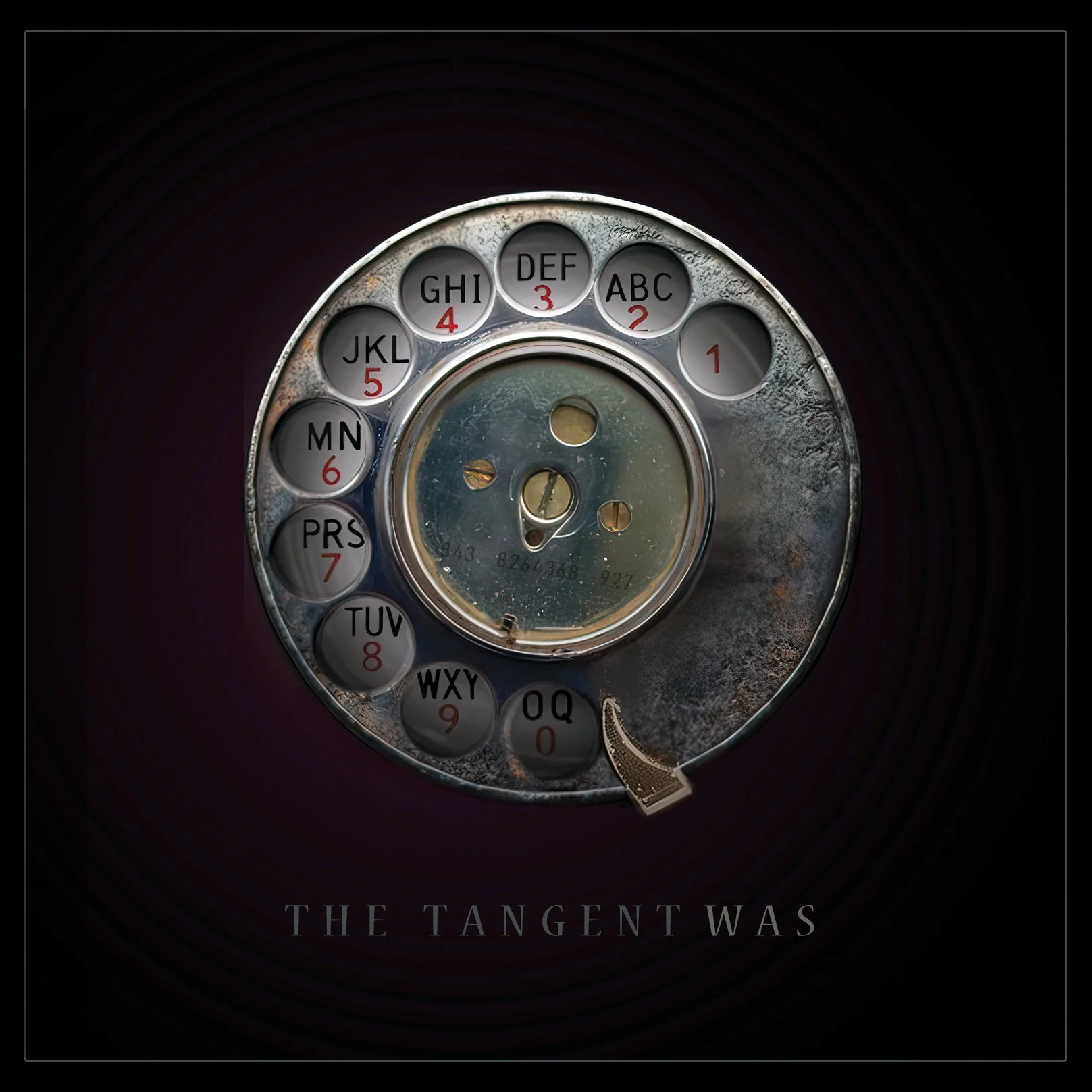
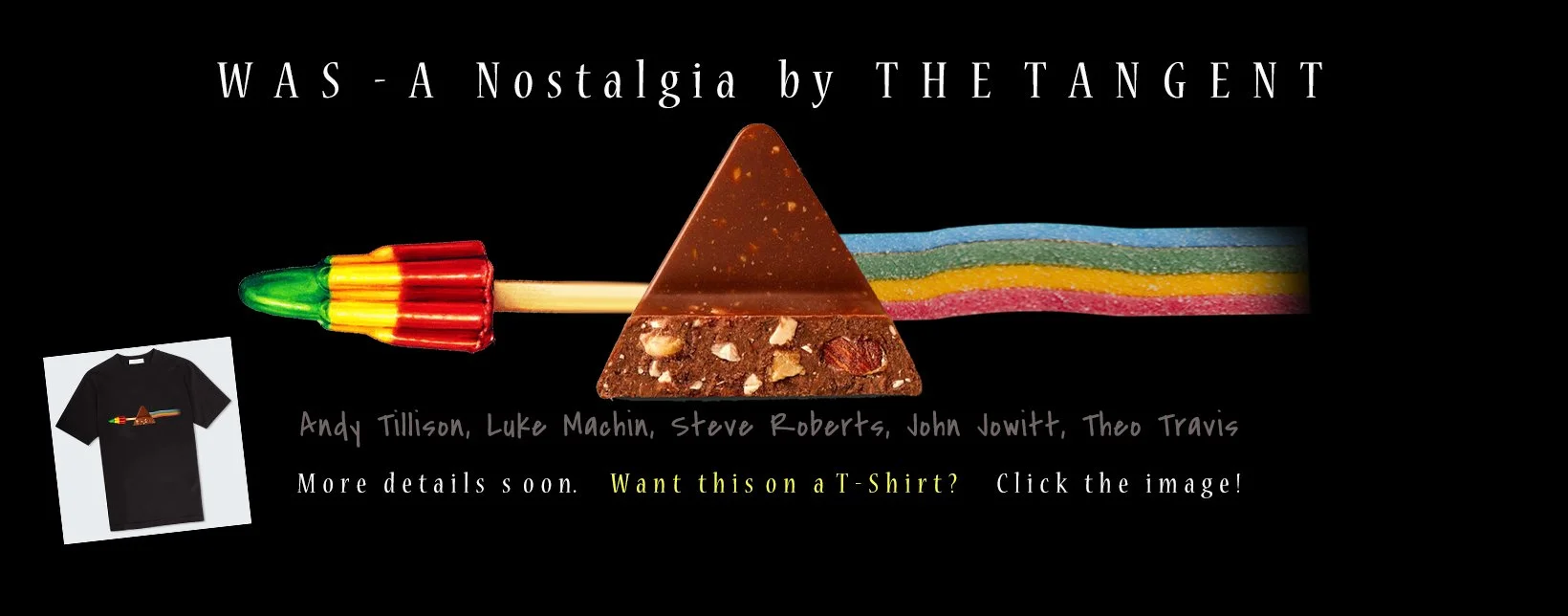
So, tonight, Andy, we're talking about Was, the new album which is coming out start of October.
It's been on the speakers here about two or three times daily since I was sent the MP3 files. I've read the lyrics provided, but what I haven't done is read the extended notes at the bottom, because what I prefer to do is to is write about what it means to me, even at the risk of sometimes getting it quite horribly wrong.
Andy Tillison
Those notes were written before I wrote the album. It's how I build up records from the top down, a kind of precis of what it is I want to write. The equivalent in cinema is some kind of storyboard of where we're going with the record. So, that works that way. And of course it's entirely some parts didn't go anywhere. Some parts did. So, you know, your own opinions are equally important here.
It sounds like I'm being optimistic here, maybe, that you've enjoyed the record?
Lazland
It’s one of the finest pieces of work I've heard. I think it is the finest The Tangent LP I've heard. I think it's a work of genius. It's just astounding.
Andy Tillison
Well, that's very nice. It means I know I'm talking with a friend at the moment, which is pretty good.
Lazland
It hits spots.
What I think was interesting is there were references to stuff like By-Tor and the more fantastical end of the spectrum, but it also contrasts that with real-life experiences, the real world, some of which is, um, plain… not depressing, depressing's the wrong word, but, in terms of things like Vietnam, real-world pain.
And that to me is the best of progressive music in that it means something. One can relate to it, and one can relate one's own experiences and how one thought about these things whilst listening to it.
Andy Tillison
That was really the kind of target.
I've had this idea boiling up inside me for a long time to do this record. It's been something I've wanted to do, and of course I knew that it was going to end up being an album that traded quite a lot, using nostalgia as a kind of weapon, really.
But you know I've never been a particular nostalgia freak myself. I prefer to enjoy what's around at the time and try to get into everything. It does become increasingly harder the older you get, it must be said.
But I do struggle with some artists that I hear, and I think…what is this? And then I asked myself that question. I once said I'd never asked myself, like, is this music at all? And I promised myself I would never do that. But inevitably it happens when things go so far away from what you're used to. But what I didn't want to happen was I didn't want to make this a rose-tinted spectacles affair. I did not just want to go back and say, wasn't everything great?
What I wanted to do was say, this is how I grew up, this is how I learned about life, and it's how I learned about music, and how those two things come together to make up who I became, and who plenty of the others became, you know, and how our generation grew up, and…
I'm not trying to kid myself that loads of sort of teenagers are going to go out and get our records or anything. That's probably not going to happen these days. They've got interests in other places and they're growing up with things that will be important to them in 50 years’ time, which are absolutely not related to progressive rock music from the 70’s at all.
Lazland
Well, having said that, it was quite surprising at Fusion. There were more younger people there than I expected. That surprised me a little bit. A pleasant surprise, obviously.
You referred there to not looking back with rose-tinted glasses, and I picked that up straight away with Not Was.
I think it's brilliant, where you talk about the stupid boy, you talk about Dad's Army, and we all remember it with a great deal of fondness.
But then you make that extraordinarily important dichotomy, that separation between enjoying what was a damn good TV show based on real-life experiences, but made into a funny show, and this appalling populism as epitomised by Farage, who is name-checked in it, that that's the type of world that he wants to take us back to. And that world just never existed.
The war was a shocking time, an appalling time, an awful lot of suffering.
Andy Tillison
This is, of course. the piece that I mean. We have the two pieces. One is called Was, and the other one is called Was Not and the former deals with that nostalgia for those wonderful experiences I had listening to Yes, Genesis and Van de Graaff Generator and discovering what I was really interested in growing up, the latter finding out about Vietnam, finding out that the world wasn't as cool as I thought it was, and, you know, breaking out of suburbia. Being the son of a preacher.
Was is just about that voyage of discovery. But Was Not is about a different kind of nostalgia, which is applied nostalgia, which is something that our generation experienced. We were the first set of people to be on the Internet. We were the first people to live our lives with a television set in the room from birth, and consequently, we get nostalgic for things that we saw, not with our own eyes, but through the TV. So, I've often wondered how is it that I know more about the people who were the head of the Gestapo, the head of the Luftwaffe, and all the different names of famous Nazis and everything, and what they did, and what their position was, and then I had to look up who was the Prime Minister in the UK when I was born.
I got it right. I didn't have to phone a friend. It was Macmillan when I was born.
But I did have to look it up to make sure, but I didn't have to look Goring up, or Himmler, or anything like that. I knew because I'd seen so many films, and you know I've almost got memories of fighting on top of a cable car that's hanging above Schloss Adler, and I've got these images of riding my motorbike over the barbed wire on the Swiss border. That kind of stuff.
And none of it happened to me, and neither did it happen to just about everybody else who's still alive today. It didn't happen to us. We have no memory of it, and all our memories of what war was about when we were actually taking part in that World War have been brought to us through films which during my youth were very, very heroic portrayals of war, like from 633 Squadron and Where Eagles Dare and the Guns of Navarone and Escape to Victory, The Great Escape, you know, these were really heroic.
As we got older, the new Hollywood people, like Kubrick and of course Spielberg came in and made the much more realistic war films. We kind of didn't like those quite as much because, you know, I kept on thinking somebody's going to say that they were kind of interrupting our nostalgia. And the great irony of it is, is that through all these television programs, I ended up becoming nostalgic for being on the deck of the Starship Enterprise with Uhura, Kirk, and all these guys. And of course, that hasn't even happened, but I'm still nostalgic for it. So, I just thought that was a kind of interesting road to go down, to look at things that never happened to me that I am nostalgic for.
Lazland
Well, I think that's a great theme. Listening to that, it put me in mind of my late grandfather, who was the senior NCO in Valletta when Hitler was trying to bomb Malta into submission, and we have taken our children to the War Museum over there, to which he donated his medals, and my dad has always told that sort of romantic, heroic memory of it - he was born in 1940, so he was a very young child when it was all going on, whereas the historical reality is it was a ghastly time, a quite shocking time. The deprivation, and they were the most bombed island on God's Earth in the history of humanity, as far as I'm aware, and the food shortages and what have you.
In a similar way, Hollywood glamorised the Cowboys and the Indians. And then around 1970 with Soldier Blue there was suddenly that very, very different way of looking at how the Native Americans were actually treated, and it wasn't very pleasantly at all.
Andy Tillison
Exactly. Yeah, you're right that the Western films did go there first before the war films did.
You know, I don't think there's anything wrong with people being nostalgic for these things. I mean, for all I've just said, Where Eagles Dare is a great, rip-roaring, boys own adventure, and there's absolutely nothing wrong with enjoying that, as long as you realize that within that same sphere, within the same block of people in that area of Germany, people were being oppressed and rounded up, herded up, carted off.
Now, very occasionally, you would get a little hint of that in some of the heroic films, like, for example, another wonderful ripping yarn, The Eagle Has Landed, where they're coming in, and trying to kill Churchill - it's a complete fiction, but there is this one moment where the chief German gets arrested because he challenges somebody who's mistreating Jewish people on a train, and he gets put in prison, so at least it touched on it.
Lazland
And you've done this so well in the LP. The perpetual complaint about social media, about mass information is that there's a lack of nuance, there's a lack of understanding behind perhaps things that we love watching, and I think you've done that so well on this LP that you're absolutely right, it is one of the most natural human conditions to look back and think that things were somehow better in the past. And we look back in fondness. Why wouldn't we?
You know, I had, as with you, a happy childhood, and falling in love with stuff like Floyd and Genesis. Hearing Jon Anderson for the first time… I can still remember my cousin introducing me. It was Going for the One, and Turn of the Century, I thought was the most beautiful thing I'd ever heard. It was just astounding.
Andy Tillison
Yeah, I can understand that, because Yes was my first progressive rock experience. As soon as I heard it, I knew this has to be it for me.
Because I was brought up with classical music, which I loved. I loved the storytelling element in it, because my mother had introduced me to The Young Person's Guide to the Orchestra, and Peter and the Wolf, and Tubby the Tuba, Hans Christian Andersen, and all these great children's music, and then introduced me to other storytelling things, like Scheherazade, like The Planets Suite by Gustav Holst.
All these things. And I loved the storytelling element of classical music, and I had yet to find it within pop music. Yes, I liked the Beatles. Yes, I'd certainly liked a lot of what I'd heard, and I liked the Beach Boys. But when I heard Yes, I suddenly thought, hell, this is like Stravinsky on acid!
That was my way in and Close to the Edge I bought when I was 12 years old in the year of its release, and I was out there queuing for Tales from Topographic Oceans the next year, you know, by which time I'd bought everything they'd done previously.
There are all these landmarks in my in my life. There are so many others, and of course they're not all as good as that, you know.
Lazland
So, CD1. Was, Follow the River, Not Was. And I thought, by God, this is good.
And then, I put CD2 on. And initially, I had to check that I had been sent the right thing.
So, I stopped, and I started again. I started on CD1 again.
And then, put CD2 on straight away, and you have married that storytelling in progressive rock on CD1, and classical music on CD2. It's beautiful. I listened again to CD2 just before this interview, and it just takes my breath away, you are telling a story, and it's pure, pure, beautiful joining of fusion and classical music. I think it's gorgeous, I really do.
Andy Tillison
There are surprises for fans when it comes to CD2, as you know. I wanted to talk about my life and discovering music and the world I lived in, I wanted to tell the story with my gob, as we say in Yorkshire, and then I thought I could also tell this story with just the music.
So, yeah, it starts off in a very classical way, in the kind of music I used to like listening to, and then I thought, well, what would happen if you actually tried to include every single musical style you can possibly think of and make a piece of music out of it?
And I thought, could it be done and could it make some sort of sense?
And so, to do that, I had to go back and look at some of my real favourite moments, such as Keith Emerson's Five Bridges Suite with The Nice. John Lord's Deep Purple Concerto for Group and Orchestra, and this hybridisation of music that was tried there, and I thought I would like to do something like that. It was a big thing to chew off, because I can't read music, so, I've got no idea how any of it works. You know it's a case of just I go on with it, and I found it happening.
I mean, it doesn't sound like a particularly good idea. If I go up to somebody and say, I want to make this piece of music. I want it to be 54 minutes long, and I want it to have classical music. I want it to have prog rock in it. I want it to have jazz fusion. I want a bit of drum and bass. I want some Latin stuff, some straightforward jazz, some big band jazz, and a woodwind section. Oh, and an ambient bit as well.
And because I've got this Tangerine Dream thread in my life as well, which is kind of just a little bit to the left of progressive rock music, but, you know, I do really like that stuff too. And I wanted to include everything, but I also wanted it to make sense and flow and feel like it all belonged together.
Now. In the end, it's never my decision as to whether it worked. I think it did, but there will be some people who think, well, it's just everything slumped together, it doesn't make any sense. And there will be people who do get it.
Lazland
No, it works. It works so well. And strangely enough, I did an interview with John Mitchell yesterday evening about his new Lonely Robot and the forthcoming Asia LP, and we spoke about Prog at the Proms briefly.
And for me, both of your new CDs, but most certainly the second, I would love to see that performed on the Proms. I'm not even actually calling it Prog at the Proms, which I think carries with it a little bit of baggage, is that the right word? For the wider audience, it might carry a bit of baggage, I don't know, not for us. But I would love to hear that performed. I think you should be submitting that to the people at BBC4. Get it in on Radio 3, get it in there!
Andy Tillison
It'd be very nice, of course.
You know, I was never quite sure whether Prog at the Proms was some sort of, like, state funeral for our music, but, after all these years of being thrown under the dustbin of musical history, then suddenly somebody finally turns around and thinks, well, these guys need a really good send-off, they're all about to die, so we'll put them on The Proms. And, I don't want that, you know? I was never part of that scene, really, and classical music people have always kind of been a bit snotty about what we do. They were snotty about Keith Emerson, they were snotty about Rick Wakeman, they were snotty about so many things. And to me, I'd rather perform it with an orchestra. But I'd like it to be about 6,000 miles away from the Royal Albert Hall. I'd rather play at a local, a really big local pub with a great stage and an orchestra.
Lazland
With a great stage!
Andy Tillison
Yeah, it'd be fantastic, wouldn't it? Or just a really nice venue, you know. I mean, what's wrong with that? You don't have to go cap in hand to the classical people and the establishment. I mean, I've got to remember I was a punk rocker once!
Lazland
Well, if you look at the early photos of The Tangent, there's some punk attitude in there, which is great. I would have been, what, 13, 14, I suppose when it kicked off, and that was certainly what most of my peers were into. I did like that “fuck you” attitude of the time, which was raging against a tired and stale establishment. And I don't think that’s ever left me. I was a trade unionist for many, many years, and I'm retiring now in two weeks' time from work. My boss called me last week, and asked what are you gonna do? Well, I said, if you think I was political before I retired, matey, you wait until what happens afterwards. I don’t think that should ever leave us, should it? You know?
Andy Tillison
Well, no.
With the music versus the establishment, I love progressive rock music, and I really, really did love it, and I grew up at school listening to it and everything, but when it came to the end of my school days, and all I wanted to do was be in a band, there wasn't a band who would have looked at me in the progressive rock world at the time.
And in fact, it had become so dominant and the great musicians and everything, I can understand a lot of the arguments that people had against prog back in the day. I see their point of view and punk was this amazing reset. It was a reboot of rock and roll, and for me, I came out of school, and I could join a band, and I could go and do gigs straight away, coming out of school as somebody who hadn't done particularly well at music there.
I love the stuff, but I haven't done well at it, and I haven't got any of the qualifications needed to go further in music, so, suddenly, yeah, I couldn't have joined Emerson, Lake and Palmer by any means, or any of the other bands. You know, I wouldn't have made Renaissance's shortlist.
But suddenly, there were bands like Blondie and The Stranglers, and I could play that. I could play their parts. I could do Dave Greenfield, and I could do the guy out of Blondie and Elvis Costello's keyboards player. And suddenly, there was this sort of way forward and a way in.
And that that saw me a long way into gigs, foreign tours, playing gig after gig, night after night, with all sorts of artists, and gradually just building it up until the point where I finally decided at the beginning of the 1990s to try and attempt to sort of make a progressive rock music record. And as a matter of fact, what I did there was I dismantled a whole load of Peter Hammill's stuff, and I made a cover album of his music.
And from that learned how you make progressive rock music and studied the songs and how the different sections work together, the tension release and the codas and all that. How did he do it? And then eventually, I started to write my own stuff, my own prog music began really in the mid 90’s.
Lazland
Well, this is fascinating because this is almost like drawing a circle because we didn't find out until quite a bit later that many of the bands that you've name checked there, people like The Stranglers and what have you, were very, very heavily influenced by Hammill.
Andy Tillison
Yes, of course they were. And the thing is, is that after they'd so shamed us proggers back in the day, the press didn't really want to admit that.
Punk started to progress from day one. I mean, we were only a year or so out from the first Sex Pistols stuff, and we were getting, Talking Heads, XTC, and all this other great music. I love it, and I have done forever. You know, so, I never saw that kind of division that they were trying to foist on us, they were foisting a division. I remember that the New Musical Express used to call people like me, who liked Yes and Genesis and ELP, they used to call us boring old farts.
How on earth have you got the temerity to call somebody a boring old fart who is 17 years old? I was 17 years old, and some old hack at the NME, who was probably as old as maybe even 25, was telling me I was a boring old fart. Well, I thought, fuck you! I'm going to be who I want to be. And I tell you what, I went to see the Sex Pistols and I went to see Yes in the same year, and I really enjoyed both. And I saw The Damned, The Clash, I saw Siouxsie and the Banshees, Slaughter and the Dogs. I even saw a band called Severed Neck and the Headfuckers!
And they were great, you know, and I saw Genesis and Van de Graaff and Manfred Mann's Earth Band, and I loved every single one of them as well.



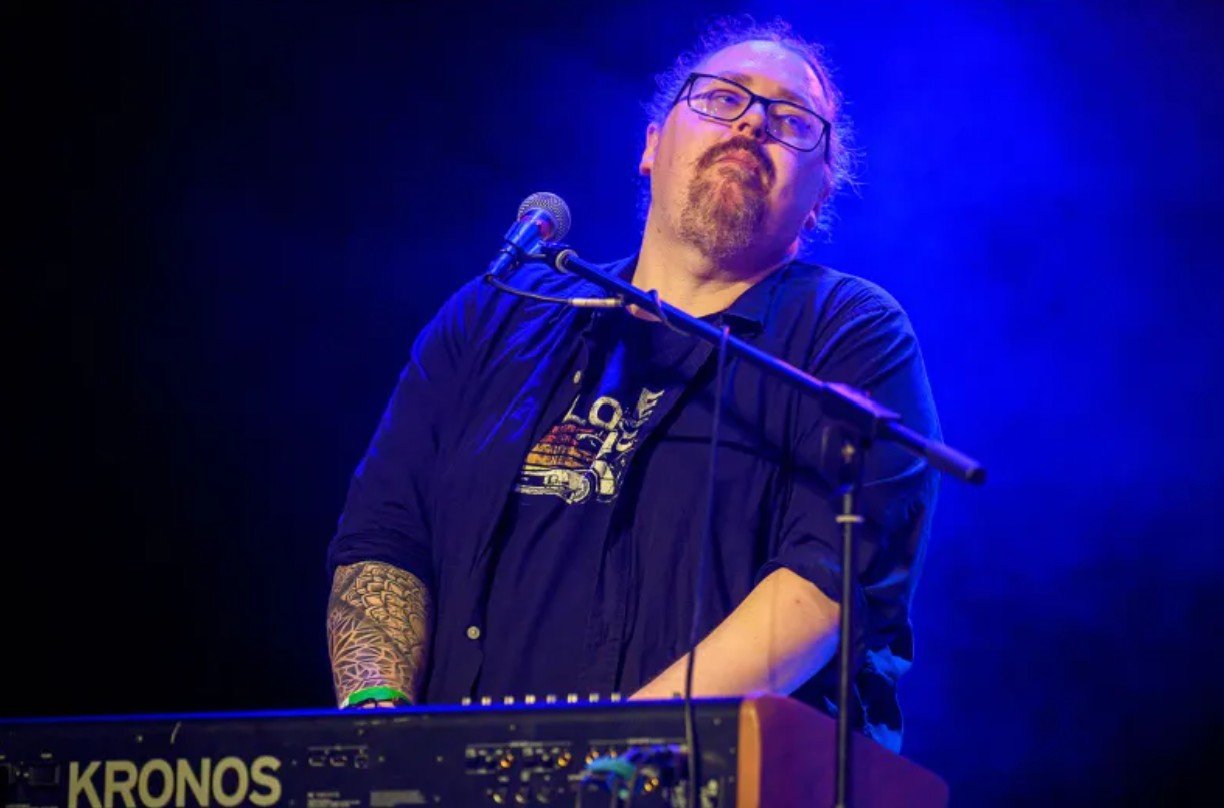
My grateful thanks to Andy for a lovely interview. You can get the album Was by going to https://whiteknightrecords.bandcamp.com/album/was
I cannot recommend it highly enough.
Lazland
Well, the irony is, of course, at least a couple of those old NME journalists have ended up writing for The Spectator, which is about as conservative a journal as you can possibly hope to get.
Right, the band!
Luke Machin. At Fusion, you made a point of praising Soulshine, his solo LP, as being a true progressive LP.
Andy Tillison
Remarkable. It's an amazing record. Really, really great record.
Lazland
You've got Theo Travis, who, quite frankly… I can't add anything that's been said about him before.
I think John Jowett's performance on this LP is phenomenal.
I wasn't that familiar with Rob Greucott. I know he played with John in Rain, so I have been listening to a little bit of that.
But I think in 2026, Andy, The Tangent is about as happy and settled a band as it's possible to be. That's what comes across to me, anyway.
Andy Tillison
It's pretty happy. You know, we've got the difficulties that all bands have now with all the European regulations and stuff. And it is difficult being a band today, but I really like the guys in the band and we hope we'll be able to carry on doing gigs and things like that.
Although it's getting increasingly difficult to turn any kind of reward for it, so we just have to… we'll make our decisions about where we're going in the future. The band aren't big enough to do world tours or anything like that. And we're not big enough because we never wanted to be. The group is as artistically centred as it's possible to be. We do this because we want to make this music, and it's not commercial, it's not easy for everybody. A lot of people don't even understand why we want to go on with our songs for as long as we do. And, you know, we have to get people past that, you know?
Lazland
Well, that space you create, that space that the listener can immerse him or herself in a story in in your life. Follow the River. I just see country walks in Yorkshire or my neck of the woods here in West Wales. It just recalls happy times. That's the shorter track, but those two longer tracks, we immerse ourselves in them, and long may you continue, because it really is the most wonderful record, and I will be writing a very, very strong review, urging people to support you.
So, thank you so much for joining me. It really has been the greatest of pleasures, and hopefully I'm going to see you again in person soon.
Andy Tillison
Well, that's very kind of you. I need to say thank you to you, and I recognise that all people who are involved in the kind of commentary industry around progressive rock music are really, really important to us, because without you guys, since the beginning of the Internet, you know, people talking about us and introducing us to people is beyond useful, and we are always very grateful to you people, all of us. I know some people will doubtless forget to say it, and I do sometimes too, but it's really important, and thank you very much for doing it.
Really nice to talk to you.
Lazland
Absolutely wonderful, a real pleasure.