Lazland
Hi Kirk, how are you?
Kirk Pasich
I'm good. How are you today?
Lazland
I'm really, well. Thanks very much for joining me.
Kirk Pasich
I appreciate the opportunity.
Lazland
I want to talk very briefly, first of all about the label that you started, Blue Élan, which I think was 12 years ago. That is one hell of an eclectic roster of artists you've got.
Editor’s Note – catch the roster at https://blueelan.com/
Kirk Pasich
It is, you know, and people question my sanity for why we would start a label right when streaming is coming out!
We've got quite the group of artists between legacy artists, I guess is what we call them these days; folks that reach back to, like, Rita Coolidge, top legacy artists like Gerry Beckley of America and Poco, and then more recent artists like the Rembrandts and Soul Asylum, and then brand-new artists. I mean, we've got a 19-year-old on the roster who we've been working with for several years. We've got a 23-year-old on the roster.
But you're right, we cover pretty much multiple genres and have for our twelve years.
Lazland
Brilliant. I did actually have a look at the Texas Headhunters yesterday. I Loved it. Loved every single minute of it.
Kirk Pasich
I am delighted to hear that. Jesse Dayton was one of the early folks we signed to the label. And we have an imprint with Jesse called Hard Charger Records, which is the Texas Headhunters. And when Jesse approached us with the idea of that trio, we were absolutely thrilled.
Lazland
Well, it fits in perfectly with this website. It's mainly prog rock, no getting away from that, that's what I'm primarily known for, but I do like also to have folk, blues, jazz, you know, because quality music is…quality music. We shouldn't just stick to one thing.
Kirk Pasich
I could not agree with you more, and when somebody asked me once upon a time, what's our philosophy for how we select artists, it was… It's all about the music. I mean, that's where it starts with us, is the music, and then the artists and collaboration, and that's one of our slogans.
Lazland
So, Signal Meridian, a collective of musicians, vocalists and you've assembled this to reimagine classic prog artists, and the first LP is Signals in Autumn. It's being released on October 23rd.
You've chosen Strawbs, which I found an interesting choice. Why that venerable band?
Kirk Pasich
It harkens back to my college days. I first encountered Strawbs on the Ghosts record, and I was just getting into prog then, starting with that, the early Kansas records, Camel, Triumvirate, Yes, ELP.
But Strawbs, to me, embodies this collective project, exploring different types of music that at some point in time can fall within the progressive rock definition.
I have everything they've ever released, but, you know, you trace them from their bluegrass days to their folk days with Sandy Denny, and then if someone had said, Sandy's gonna leave and be replaced by Rick Wakeman, you'd go… well, how does one band have the two of them?
And then Blue Weaver comes in, and you look at Blue Weaver and you say, but wait a minute, didn't he do keys and everything with the Bee Gees and the Average White Band? How does that fit?
It was interesting, because that was the period of time, 1974 to ‘78, where they didn't have a full-time keyboard player in the band.
And you're like, well, how's that progressive? But, you know, they had great keyboard players that came along and played with them, but that's sort of what I viewed as their move from a progressive folk band into a progressive rock band.
And so, that's kind of why I picked them, is they evolved.
Lazland
Well, I really like that, because if you look at certain prog review sites, some reviewers can tend to have a bit of a tunnel vision. And I think it's fair to say that the last four of the six LPs that you've chosen, so we're talking about ‘74 to ’78 would be regarded by most of those sites as being more pop, more rock-orientated, as opposed to prog, which actually is a green light for me to explore things, because it was different. It moved on from what they had.
Kirk Pasich
It did. And, you know, I wouldn't disagree with that characterization. I think at that point Dave Lambert became more of a songwriter and sang leads on a number of those songs. I always viewed him as more of a rock than progressive person in the strictest sense.
But, you know, I saw an interview with Geddy Lee of Rush where he was talking about how bands evolve and what the challenges are, and one of the bands he cited was Strawbs.
And that resonated with me.
Lazland
Well, Rush took a similar sort of journey. My favourite Rush period is actually after Moving Pictures, so Grace Under Pressure, Signals through to Hold Your Fire. In some circles, they were lambasted for moving away from 20-minute epics to 3 or 4-minute pop songs. I thought they were great.
Kirk Pasich
Yeah, you know, prog probably got, to some extent, a deserved negative reputation because a lot of listeners tend to think if you're not doing 7/4 time and 12-minute-long songs and keyboard solos, it's not Prog. But I've always thought a lot of bands came in and out of what we would consider progressive. If you stripped the band name off, and you played a particular song, you'd say, oh, that's progressive rock, and then you look at the band name. I mean, there are a couple of Crosby, Stills, Nash & Young songs that would fit dead centre and progressive, but nobody's gonna call them a progressive rock band.
Lazland
Couldn't agree with you more. And I've played them on the radio show. I absolutely love it.
So, music lovers can get Signals in Autumn at https://blueelan.com/collections/shop and I've got to say the prices are very, very reasonable. £20 for the vinyl LP, and £10 for the CD.
Kirk Pasich
Yeah, we wanted to make it affordable. It's hard in this market, obviously, to deal with it, with pricing, with streaming, with the advent of AI.
And that's one thing that sort of characterized what we wanted to do. I mean, we recorded these songs in five days. We did them live. We put the full band in there.
Lazland
Oh, right, so you were all in the same room?
Kirk Pasich
All in the same room. We did it at a studio called Dave's Room Recording Studio here in Los Angeles. It goes back to the ‘60s, when it was known as Mama Joe's, and some of the great American artists recorded there. But I look at some of these Strawbs albums, for example, and I know that they spent 2 or 3 or 4 months doing them.
So, we did 10 songs in 5 days.
Lazland
Well, it's brilliant. Brilliant.
So, none of this was done digitally at all? Everything was done in the room?
Kirk Pasich
Everything was done in the room, and, you know, when I was fortunate enough to be able to assemble these great musicians, basically, every day, what we had in the room was a drummer and a bass player, both of whom we borrowed from Grace Potter's band. We had two keyboard players who had not really played together before. We had two guitarists who had not really played together before. And so, when you're doing things like, okay, I would say to Sasha, who was the co-producer and keyboard player, I would say, Sasha, I hear keyboard parts here, go. And Sasha would talk to Paul Trudeau for a minute or two, and then they'd go. And most of these tracks, complicated as they were, and the band found them very challenging. I mean, you have time changes and modulations and things like that, and we're trying to update them, and none of the band was familiar with these songs. When I mentioned Strawbs, their reaction was, who?
So, you're taking a band that didn't know the songs, some of the songs are complicated, some are more straightforward, and you're saying to two guitarists, okay, play! And hey, we hear a solo here, you guys figure out how to do that solo, I hear the two of you, or to the keyboard players, you know, Paul, if you're gonna be on the Hammonds, Sasha, what are you gonna be on? Go! And, we would get most of the songs in 2 or 3 takes maximum.
Lazland
Yeah, it fascinates me because that's almost, you would say, like a collective of musicians coming together and doing a bit of freeform jazz improvisation as opposed to a more structured, complex set of progressive songs, and certainly looking at the people that you've got there, and who they've worked with. I see that Bernie sang for eight years with the Moody's. Holly, working with Bowie, Vanessa working with Lady Gaga, which is fascinating. You've got Adam, with Paris Jackson, and Val with Jackson Browne. These are not artists that you would normally associate with either prog or, indeed, free-form improvisation. I think that is, more than anything else, what gives this LP its unique sound and feel.
Kirk Pasich
I think you're right. I'd worked with these various musicians, several of them. Sasha did a solo record for the label, Paul Trudeau did a solo record, Bernie Barlow did one, I signed Jordan West to do one, so I've worked with these musicians, and so even though they come from different worlds, I knew they were really great musicians, and I thought, yeah, we want to do this fresh. We want to honour the originals, but I couldn't think of a better way to do it with a fresh approach than to take musicians who didn't grow up in the prog world.
And that was kind of my thinking.
Lazland
I think it's the right thing. I have reviewed the LP, and the review will be going out at the same time as this interview.
I make the point in the review that it is very, very rare, for me to review a covers band, or indeed, an album of covers. The main focus of the site is to promote new music, and especially by newer artists, so less well-established and less well-known artists. But what struck me, and Signals in Autumn blew me away from the very, very first set of notes, and the reason why I fell in love with it, was that this is not a band doing a cover of Strawbs songs. This is a band that are doing Strawbs songs in a new, in a fresh, and in a modern way. That's what hit me from the word go.
Kirk Pasich
I appreciate that, and I certainly appreciate your interest in the album.
There's no reason just to be a covers band, in my view, not with these musicians. And one of the things I was really hoping to do is, you know, we didn't bill this as a Strawbs tribute. I mean, here in the US, calling something a Strawbs tribute would get no reaction. People go, what? What are you talking about? One of the things we're hoping to do is to reintroduce this music, because I think these songwriters are terrific. I don't think they got the attention that their music warrants, and so I'm hoping that people who find Signal Meridian in this album will use it as a path to go back and revisit some of the music… I mean, this band was together for sixty years, and their last album came out three years ago, so I'm hoping that if people like how we've sort of re-envisioned, reimagined, reinterpreted, that they'll go back and listen to the originals as well. And if they do that, then, you know, we've accomplished something I think that's pretty cool!
Lazland
I absolutely agree with that. I think it's a very noble aim. And I've got to be honest with you, Kirk, I didn't know, I was astounded that none of these six LPs, Bursting at the Seams, Hero and heroine, Ghosts, Nomadness, Deep Cuts, Burning for You and Deadlines - not one of those LPs made it to the top 100 in America. And I don't know whether you know this, only two of them charted here in the UK, and that was Bursting at the Seams at number 2, and Hero and Heroine at number 35, which is incredible.
Kirk Pasich
It astounded me, too, and I was aware of where they charted in the UK, and I remember back in the day, somebody said, well, Strawbs are trying to move to appeal to the American audience. And in fact, they did a tour in the US where they opened for Pablo Cruz, and I remember that they did a date at the Santa Monica Civic, and they opened, and when they were done, the lights came on, but the crowd wouldn't let them go, and they did another song after the lights came on before Pablo Cruz.
So, I think, you know, that they fell off the charts in the UK, in part because they're moving more to rock, pop, American sound, and it didn't… I mean, Little Sleepy, got some FM play here, but it didn't take them up the charts in the US, and I think it cost them chart positioning in the UK.
Lazland
I think that's absolutely right. The other thing that really hits you with this, as you say, Sandy Denny did an extraordinarily brief period with them. Legendary, of course. It was very early in her career. But aside from that, that was the only female voice in the Strawbs. So, we had Lambert, we had Cousins doing the vocals right the way through near enough, and yet, you have four female vocalists reimagining that, and, by God, they're good. I mean, all four of them, aren't they?
Kirk Pasich
They're amazing, and it was deliberate. I realized that Strawbs, with the exception of that Sandy Denny song, and we did it with the way she originally did it with the Strawbs, her original lyrics, not how she tweaked them later, she recorded it in 67, it was released several years later in part because of the recognition she had gotten by that point in time. But yeah, it was deliberate on my part. I said, you know, these were all male singers. Let's do them with all women. That will make it distinctive right out of the box. And in fact, if you look at those successful classic era prog bands, they were all led by male singers.
And so, we were deliberate in saying, let's have women. And we're fortunate that we have some great singers.
Lazland
Absolutely. The first single which I played on my radio show two weeks ago was Heartbreaker, and the vocalist, is Vanessa Bryan, and by, by heaven, she belted that one out. It’s remarkable.
Kirk Pasich
Yeah, she's stunning!
Lazland
So, what I'll do is a couple of quotes then from the review that's to come. To quote, “I think it best to clarify that this is not merely a straightforward covers album. We have ten tracks from Strawbs, but a reimagining of that illustrious band's output”.
Now, I'm very, very curious. You've got six LPs there, so you've probably got something in the order of 70-odd, 80 pieces of music potentially for you to do. How did you narrow it down to the ten on the LP?
Kirk Pasich
That was the era where I fell in love with Strawbs. Those albums remain my favourite Strawbs albums. So, when we started this project, I really didn't have Signal Meridian in mind.
But when we got in the studio I realised this should be more than just doing this sort of one-off thing, and that's when we decided, and I was fortunate that everybody involved said, yeah, we love this, let's do more. And so, I picked the songs, the Strawbs songs from the era where I fell in love with them.
And, you know, I could have done songs from 2023, or I could have done songs from 1968, but I focused on that era. And in part, I wanted to pick songs that I thought we could do in a way that would be accessible to a broader audience.
If I focus purely on some of their early, more folk-oriented stuff, much as I love that music, it's a narrower audience. Likewise, progressive, true progressive is a narrower audience. So, I kind of picked stuff that would pick up the pieces of the various eras but went with the music that; a) I loved most from that era, my college days, and b) that I thought would have a better chance of reaching more people.
Lazland
I think that's a fair comment. But we do, though, have one pure prog classic. I played it on my radio show a couple of weeks ago, and it's of course The Autumn Suite from Hero and Heroine, and I will quote again from my review. I said Jordan West handles the vocals on this classic. I initially approached it with no small degree of trepidation.
I needn't have worried. Almost nine minutes achieves a very difficult balance of being faithful whilst bringing something new to the table. I just love that there's some ghostly guitars above that synth at the start.
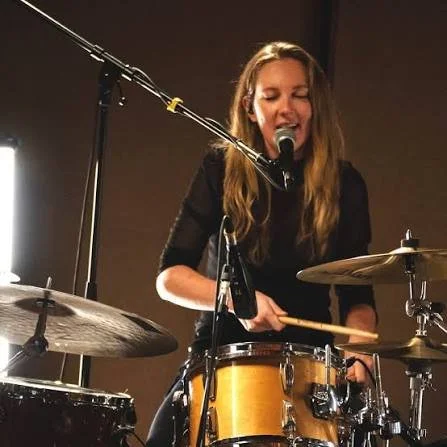
And then there's that militaristic bass and her and the drums creating an atmosphere. And then we have that very, very familiar set of riffs, which I think comes across so well. And her voice is gorgeously melodic, and I think she's got a real feeling for what is, at the end of the day, a very pastoral piece of music, and when she sings “still waters flow”, it transports you to the world that the band wanted you to be transported to in the first place.
Kirk Pasich
Yeah, I think Jordan did an amazing job on that.
Before I offered her a solo deal, I'd heard two of her songs on Spotify.
I knew her as one of my favourite drummers and percussionists, where I think she's amazing, and so I asked her if she would like to sing Autumn.
And, it was a little bit of a leap of faith, but you could have heard the proverbial pin drop in the room when she was singing that.
It's gorgeous. She did an incredible job with it.
And you're right. I mean, that song is pure progressive rock.
But, I said to myself, how can we not do that song? Now, of course, having said that, then it was like, how do we land it?
I mean, how do we make it different but still beautiful and kind of capture the magic of it?
In many ways, that was the most challenging song we did. But, I thought the band came together. I mean, we talked… to put Val and Adam on the guitar pieces at the start, I mean, I had something in mind where I wanted to honour what Strawbs did with it, but I wanted to do it a little bit differently.
I'm never going to tell these players how to play. Why would I ever do that? I mean, they're so much better at what they do than I would ever be. But they all seized upon it, and I think that was three takes for Autumn. And what we did is we took it in three pieces.
We did the first piece, and then we did the second piece, then we did the third piece. Both because I wanted… I remember Dave Cousins talking about doing it that way because of the royalties that they would get, you know?
But I also said, I don't know that we can count on radio playing nine minutes, so we have the radio edits that are each of the three pieces, and then we… when we did it, you know, we wanted to make sure we had a transition among the pieces as they move one to another, but Jordan's magic on that is absolutely gorgeous, and when we listened to it after the first run-through, the first take, I knew we were gonna get it. I knew this band and Jordan were going to get it.
And I breathed a very deep sigh of relief, because if we screwed that up, we would never live it down.
Lazland
Well, I'll make you a promise. On Progzilla Radio, we have no hesitation in playing anything from 10, 20 seconds (Ivor Cutler) all the way through to mega epics, 26, 30, 40 minutes, but we don't care. We'll play them all! I will play this version of Autumn on my show after the release date, because I think it is simply wonderful.
And we, we were talking about the range of Strawbs progressing. So, your bluegrass, your folk, your folk rock, your progressive rock onto a heavier rock, onto a more, perhaps, commercial heavier rock, all the way through.
But on this, because of the musicians that you've used, because of the label, because of the background that you have, I don't know, there's clear Americana, there's some southern blues, there's some very, very distinctive American rock as opposed to English rock, and you will appreciate the difference between the two. So, in other words, I think what you've done is you've got a foundation there, but what you've done is you've lifted that foundation, built on top of it, from a distinctly English band to a distinctly American sound.
Kirk Pasich
I think that's right. I mean, I don't think I would have thought of saying it that way, but I think you've captured it nicely. You know, the only English musician we have is Bernie Barlow, but, you know, Bernie spent not only those eight years with the Moody's, but she was with Sarah McLachlan, and she was with, you know, with Melissa Etheridge, and she sang with Bob Seger, so she's done a lot of American stuff. Obviously, our label has a lot of Americana.
But, putting these disparate pieces together, I mean, Paul's spent years now with Billy Idol after playing for a long time with Melissa Etheridge. You take those pieces, they're Americana, they're American rock.
You know, it's hard to call Jackson Browne an English musician, right? He's not. And from writing some of the Eagles hits to his own big hits, and he's probably more of a country rock musician.
I mean, I've always viewed progressive rock as kind of without boundaries. I mean, you can talk about metal versions of progressive and blues versions, and so when we assembled this group, it's like, we have all these different influences here, and people that play different things, and the challenge for me was to pick a group of musicians in there that I thought could play well together, capture what I was hoping we could capture, because I've produced some records with great people, but this one, my nod to progressive, if you will, was saying, I'd like to co-produce this with someone, and I'm picking a keyboard player.
And that was my nod to Progressive Rock.
Lazland
In the press kit that was sent to us, there was talk of a tour, which interests me. First off, will it be with this core collective of musicians? And second, downtown LA is quite a long way from where I am, so how about the UK? Would you consider coming over here?
Kirk Pasich
Yeah, absolutely. I think if we were prioritising where to do dates, we would start with the UK.
It's always been more hospitable to progressive rock, more open to a wide range of music. You know, we've signed artists from the UK and Ireland, Scotland, you know, various places. We've had K T Tunstall on the label, Young Guns, Silver Fox, the Devlins, and Lisa Lamb from Ireland.
You know, the Headhunters have toured there, Jesse's toured there.
To me, playing across the pond would be magic.
We've got one album in. I'm going in tomorrow to finish vocals on our second album, and then we've got a third one slated. We're planning on a fourth one. The fourth one will have original material, as well as some select songs from progressive artists. Because, I mean, the players are great songwriters in their own right.
And then, because I'm insane, maybe, we recorded a song that will come out in November after this album that is really a holiday-oriented song. We took a 16th century French carol, I wrote new lyrics for it, and we've given it a progressive treatment. So, this French carol that was about two minutes long originally, and we may or may not have borrowed a little bit of Tchaikovsky to introduce it, but it's now about eight minutes long, and it is certainly progressive, I'll put it that way!
Lazland
Well, this could be the 2026 version of 16th Century Greensleeves!
Kirk Pasich
You know, I always loved that song. I loved Rainbow's version of it, and I love how Ritchie's one of those people, too, right? That move from hard rock to what he's doing with, call it Celtic rock, or however you want to call it, with Blackmore's Night.
Lazland
I love it.
Kirk Pasich
The key was, of course, when I talked to Sasha about this idea, it's like, well, boy, progressive rock has really hit the back catalogue, so we're not gonna go that way. I said, well, if we're doing a single that theoretically is holiday themed, I mean, there are no sleigh bells or anything, there are some allusions in the lyrics to the lights of the season, things like that. But it's; let's pick something that nobody else would think about. The French carol, if you translate it to English, is called The Ox and the Grey Ass!
Most Americans will say, well, it's The Ox and the Grey Donkey, but it's literally the ox and the gray ass, so we've… we've renamed it to match our new lyrics to call Every Road Leaves Home.
And same group and yes, an answer to your question. All these folks have other gigs in their life, right? I'm not gonna tell Val to walk from a Jackson Browne tour, or Curtis and Jordan not to do, you know, the next round of Grace Potter.
But we'll find some dates and I would love to put this collective out on the road next year. You know, our second album will be out in Q1 of 2027. We're not doing the album a year thing. We will record the third album either in December or January, and plan to release it next year, so I want to make sure we have enough material.
We've been careful in selecting who the artists are that we want to sort of revisit the first three albums before we broaden it. I think it'll be something very special, and I think these musicians are very special, and I think it's about the only place you'll see this kind of variety of players together in one band.
Lazland
Well, I will certainly travel here to see you. Am I allowed to ask which bands will be subject to reimagining for the forthcoming albums?
Kirk Pasich
You are. The next one we're calling Signals Across the Twilight. We are revisiting Golden Earring.
Lazland
Oh, wow, okay.
Kirk Pasich
Not a progressive band, but they did some progressive tracks, and they're very much a 1961 to 2023 band, so they're sort of same era as Strawbs. They didn't venture nearly as much around musical styles, but they were unique in that they had four members who were members in 2023 that were members in 1969.
Lazland
Which is incredible.
Kirk Pasich
And so, they had amazing continuity. And you know, they had two big worldwide hits, but outside of a few countries near their homeland, most people don't know their catalogue. And so, as I did with Strawbs, I picked 10 out of more than 120 Golden Earring songs and we've recorded those. So that's that sort of project too. Basically, in the can where I want to do some vocals tomorrow that we didn't capture. We added a new player to the collective, Ginny Luke. Ginny was the youngest member of Meat Loaf's band for several years. She's an incredible electric violinist and singer, and so we've added her to the collective. That's album two.
Album Three, we're going straight to a great UK band who I also loved. We're revisiting Manfred Mann's Earth Band.
Lazland
Oh, well, fantastic.
Kirk Pasich
And, it's not just going to be the Earth Band. We're going to pick up a little bit of Manfred Mann, a little bit of Chapter 3. The 50th anniversary of the Roaring Silence just came out with three new tracks on it. Their Melissa Etheridge cover, I love.
I'm glad to see that they're still doing some things, and I thought when they added Hart, who'd been the lead singer in the last iteration of Bad Company to the band, I thought, well, that'll be a different sound, but it's not really.
So, that's Three, and then album Four will be, because we're Prog, it's a two-record set. And it'll be one LP of all originals, and then one LP where we revisit stuff.
Bernie Barlow has in mind a Moody's song that she wants to do. She probably sang it a thousand times with them, but we'll pick up a Moody's song, we'll pick up some other songs. You might hear a little snippet of Camel in there, and one from Kansas, you know, gonna have some American Prog in there. The originals will be the members of the collective writing them.
It'll be very cool seeing how they do that with working within, loosely, the progressive umbrella, which is something none of them have really done before, but they're all excited about it, and, it'll be fun.
Lazland
Brilliant. Well, I look forward to them. It sounds exciting.
And again, in the press pack, you said that you see it becoming something semi-permanent in the mold of Alan Parsons' Project. I absolutely adored APP, and interestingly enough, Kirk, that's another collective, where the purists might say… ah, that's not Prog, whereas those of us who are a little bit more open-minded will say, well, actually, it was very progressive, because you will hear different things and different ideas in every single LP, and hopefully you and Sasha will move forward, I thought the partnership between Alan and Eric produced some of the finest music of the last forty, fifty years, actually, until Eric sadly passed.
Kirk Pasich
I could not agree with you more. The Alan Parsons Project was really the inspiration to me to do this, knowing that I can't always guarantee that we'll have the same musicians. Like on album two, Paul Trudeau was out on the road with Billy Idol, so he's not there on album two, but Ginny Luke is. And, you know, APP had a fair number of carryover players or singers, but not all the same all the time, certainly. And, I was introduced to some vocalists there that I didn't know before they sang with the project, and went out and listened to their other work.
Lazland
Yeah, I think Chris Rainbow was a good example. I hadn't heard anything from him before I first heard his work on The Parsons Project and ended up a huge fan, loved his work.
Kirk Pasich
He would be the first one I would name, and so, you know, I have no pretence that we're going to match what the Alan Parsons Project has done, but it's certainly inspirational. Somebody asked me if, in the band, because we were talking about the Alan Parsons project, they said, would you compare yourself to Alan Parsons? And I said, not in my lifetime would I ever compare myself to him. What I would say is inspiration.
What he and Eric did over the years, and he's still doing with his Alan Parsons live thing, taking different singers and really making a sound that became identifiable as the Alan Parsons Project. I don't think I ever would have predicted that you'd hear some of those songs in American sports events at arenas introducing teams, but, I always liked and admired and respected what they did, and so this isn't paying tribute to Alan Parsons any more than we're trying to be a tribute to somebody else.
But it's recognising that without Alan Parsons, honestly, I don't think we'd have what we have as Signal Meridian. So, he set a high standard. We're gonna try to nudge up to that standard, but I have no pretence that we're ever gonna match that standard.
Lazland
Well, we already got one album, Signals in Autumn, and as I've said in my review, the first time I listened to it, it blew me away. I'm now on around about the 15th listen to it, and it's still blowing me away. It's an LP that I will play regularly, I think over many years to come. I think it's a fine piece of work. Congratulations and thank you for it.
Kirk Pasich
Thank you.
Lazland
I will absolutely be following what you do moving forward, and you never know. Let's make it two promises! First promise, Autumn Suite will be played the Saturday afternoon after release. And the second, how about we get together when you come over to the UK, and we'll plan to do something else for the fifth album of Signal Meridian?
Kirk Pasich
That that would be great. You know, I'd love to hear your thinking on what that would be and how to do it. I've been a fan of what you've been doing for quite some time.
Lazland
Well, thank you.
Kirk Pasich
For a while, I lost my way among Prog. You know, we weren't listening to a lot of Prog here, it wasn't getting a lot of attention. And then, I started to think, well, whatever happened, and, there's certainly a… what I think is a renaissance of progressive rock.
You go on Facebook or Instagram or wherever, and you see a lot of these groups, and it's all about 1970s progressive rock. But there's a whole lot of great progressive rock that's come out, particularly in the last few years. I'm stunned by how much really good progressive rock there is without a US audience, though. And so that's part of what we wanted to do is given this sort of revived interest in progressive rock. If we do a 2026/2027 version of some of these classics from the ‘70’s. Hopefully, we can pull those 70’s people forward, and we can introduce people today to not just current progressive rock, but really its roots. And, by the way, I don't think the roots were in the 1970s, I mean, I think of some of the Greek progressive rock in the 60s. You can trace it back to the early 60s. There were bands that were talking about being progressive. You know, you could argue pieces of it go back to the 50’s or earlier.
But when progressive bands and others started, you know, ELO, revisiting Beethoven or the Beatles, then it clearly didn't start in the 1970’s.
Lazland
Absolutely not. And you're absolutely right. There is a straight line between Yes, always starting off with Stravinsky. Jon Anderson's touring the UK now with the Band Geeks, who are wonderful, exceptional, and they're still starting off with that, and I find it is fascinating to revisit very, very old music, as you say, even the 40’s, 50’s, I mean, Miles Davis, go back to some of the stuff he was doing. Before anybody had even thought of calling music progressive, he was doing progressive music. Incredible as well.
Kirk Pasich
He was, and you know, I had the privilege of being on the board of directors of the National Academy of Jazz, and I worked with, at later stages of his life, Woody Herman, and you know a lot of what Woody Herman was doing would be progressive.
I can remember a board meeting; I was sitting between Pancho Sanchez and Chip Corea.
I mean, they're two completely different styles, right? But you listen to what Chick Corea was doing, how is that not progressive? It was in jazz, but it was progressive.
Lazland
Well, on Progzilla, which does have a following in America, we capture that in our playlists. We're based in the UK, but we do have American DJs, so Alan Kraslow does a four-hour weekly show - he's just down the road from you, uh, in American terms. Also, Mike Pollock up on the northwest coast who plays more adventurous and experimental music. Um, but I think you're right. I think what would be…
There is a solid movement that respects and plays and appreciates the roots of what happened, but also recognises, as you say, there's some really, really good stuff out there now, including from America.
Kirk Pasich
I think that's right. And, you know, I grew up, I was a classically trained organist from the age of five. And so, that's my music background, but I have no pretence of matching a Paul Trudeau or a Sasha Smith in terms of their talent.
I dabble at it. I mean, I have a pump organ, and I've got a Celesta coming in, and I have a Kronos 6 keyboard. But those guys are incredibly talented. And I'm OK. I mean, I play at my house kind of thing.
Sasha asked me once, well, how often did Alan Parsons play with all those early APP artists touring? And I said, what Alan Parsons Project tours? The project really never toured. You know, I remember Alan Parsons saying something to the effect of, well, what would I do if we toured?
And that's kind of my reaction. But, introducing people to that classic music. And look, one of the reasons when I was thinking about singles, you know, we picked Heartbreaker and then The Last Resort, which is both Bernie Barlow and Vanessa Bryan singing. Autumn’s the most progressive one, but I didn't think we could lead with such a progressive track. But it is the album emphasis track.
It'll be the focus track when the album comes out and putting my label hat on for a moment, It's like, if we lead with Autumn, that's most likely to pull in the true hardcore progressive fans, and least likely to reach beyond that.
If we lead with Heartbreaker and The Last Resort, there will be some Strawbs fans that are like, uh, yeah, that's not really the era we liked.
So, it was the tension of trying to figure out what to do, and look, we're fortunate. Believe distributes our records in Europe and the UK, and The Orchard/Sony distributes them to the rest of the world. So, we've got worldwide distribution, which is great. And you know, Jesse Dayton, he's a secret prog fan, you know, one of the great Texas guitarists of all time. I mean Jesse played with Waylon Jennings and Johnny Cash. He's sat in with the Mavericks and the X, and obviously he's got his solo stuff in the Texas Headhunters, but he's said some comment to the effect of; I kind of like being on a label where one of the founders has the brass to do a progressive rock album.
And I thought, you know, it is a virtue. I did get to make that call that we should have something that's progressive rock.
Now, in fairness, we released Jon Anderson's last solo record, 1000 Hands, so it's not like we never ventured into it.
I don't think most people in the music world today would sit down and say, well… you know what? Let's do a 2026 progressive rock album revisiting music from the 1970s. That's a big number one selling record!
But I'm a founder of the label. I got to make that call.
Lazland
Well, which is great. And I mean, there's a stereotype that punk killed prog off back in '76, '77, '78. I interviewed Andy Tillison of The Tangent, a couple of weeks back, an exceptionally talented and nice man. And he made a really good point in our conversation. He said, look, when I started off I wanted to play Yes or Genesis or Camel, but I couldn't. So, I started off playing Sex Pistols, The Clash and similar music, and he said, what I did was I got better, and I progressed, but I never lost sight of where I came from.
And I do actually think, Kirk, there's a little bit of a culture change happening that younger audiences, there's more of an acceptance of a wider form of… they don't want to be boxed in just to commercial music, just to this or that type of music. So, you know, I think there's hope for the future. Which hopefully is good news for people such as yourselves, head of a label.
Kirk Pasich
I hope so, you know, that the challenges out there, we all know them, and we've been fortunate when I think about the styles of music… you know, Rusty Young of Poco was an artist who I wanted to sign, and we were blessed to release his only solo record. He's the only guy in Poco that played every show, and played on every record, and yet never did a release outside of Poco.
And so, it took me two years to convince him to do his legacy solo record, but Rusty was telling me one day, they opened for Yes. And he was talking about, you know, did that billing make any sense?
And he said, I was in the hotel one night, and I could hear somebody playing Ernie Tubb down the hallway. And I'm thinking, who's that? I walk down there and it's Steve Howe!
And so, he said, we and Yes really were similar in a lot of ways. We did intricate things. We had unusual instrumentation. I played my steel guitar through a “Tall Boy” Leslie speaker.
So you think about it, if people who like Yes would ever sit down and listen to one of the pioneering country rock bands in Poco, they'd find a lot of things they like that remind them of some things in Yes.
Lazland
I agree.
Kirk Pasich
And that's one of the goals of Signal Meridian, is to not limit ourselves to, oh, let's duplicate that sound or stay in this one lane. And that's why we picked a Sandy Denny tune. You know, it's unlike anything else on the record. And Holly Palmer does an amazing job on that song.
So, it's in our own way between that, which harkens back to the early days of Strawbs and Autumn to the progressive days. We tried to hit the different sounds of Strawbs while staying in that era where I fell in love with them/
Lazland
Well, again, to quote my review; “what Signal Meridian do so well on this is to recreate the spirit of a master songwriter who was, yes, feeling her way in the music world, but whose genius was already evident, and this beautiful piece of music is brought completely up to date with 2026 production values. It's a contender for my track of the year on the website, and it's probably about the finest cover version I think I've got in a fairly large collection here”.
So, Kirk, I want to thank you very, very much for giving me your time. This really is the most superb LP. It, as I say is being given a glowing review.
I wish you every success with it. I look forward to numbers two, three, and four, and I really, really look forward to us perhaps sharing a couple of war stories, or a glass of wine, or what have you, sometime next year when you tour.
Kirk Pasich
Steve, that would be absolutely great, and listen, I appreciate your kind words, but what I most appreciate is your enthusiasm for the music. I mean, your reaction is what we hope to get, and so it's very inspiring. I'm gonna tell the other members of Signal Meridian when I see them tomorrow that you really like the album and you really like what we've done and what they've made. And it is a true collective. It's not something where I could have done this on my own. It exceeded my expectations and that's really tribute to them. But I really appreciate your interest and I thank you kindly for it.
Lazland
Well, thank you very, very much indeed.