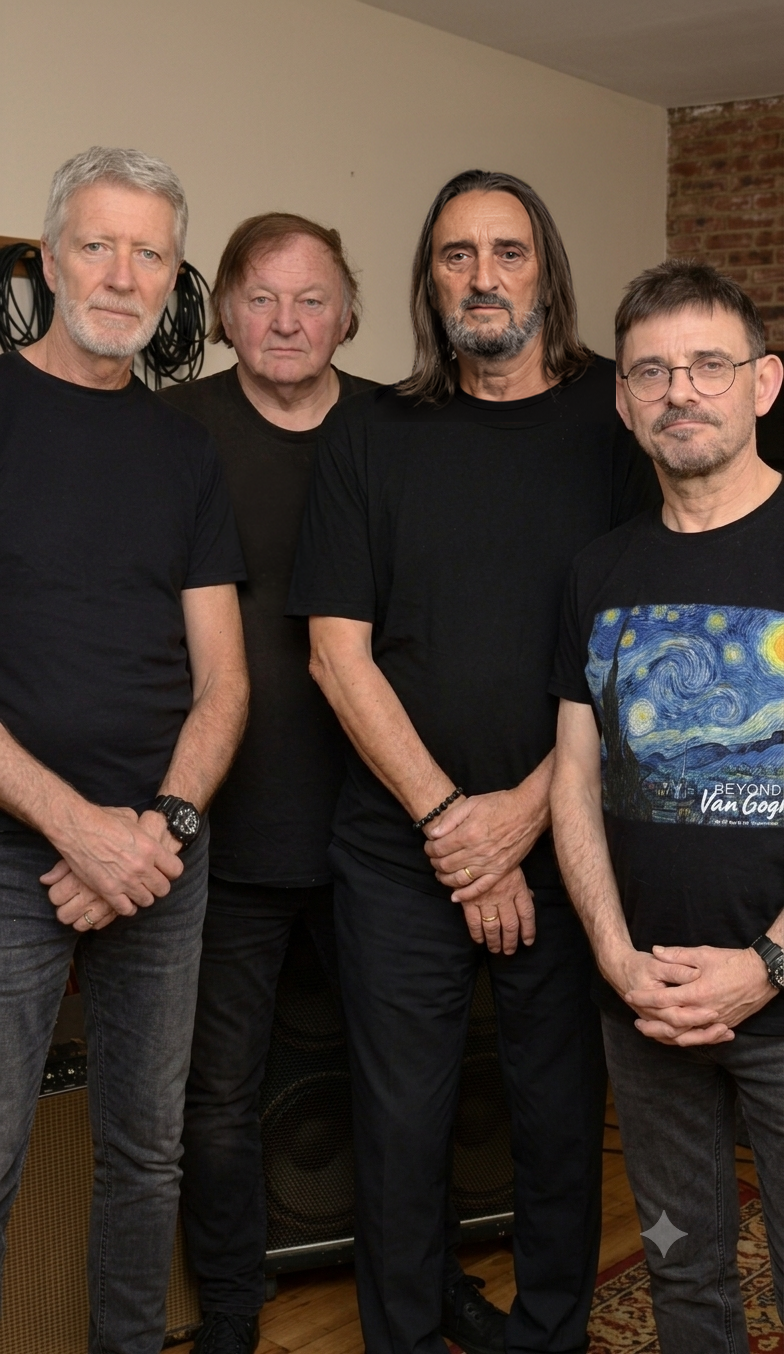
Interview with Pallas. October 2026.
Ronnie Brown
Graeme Murray
Niall Mathewson
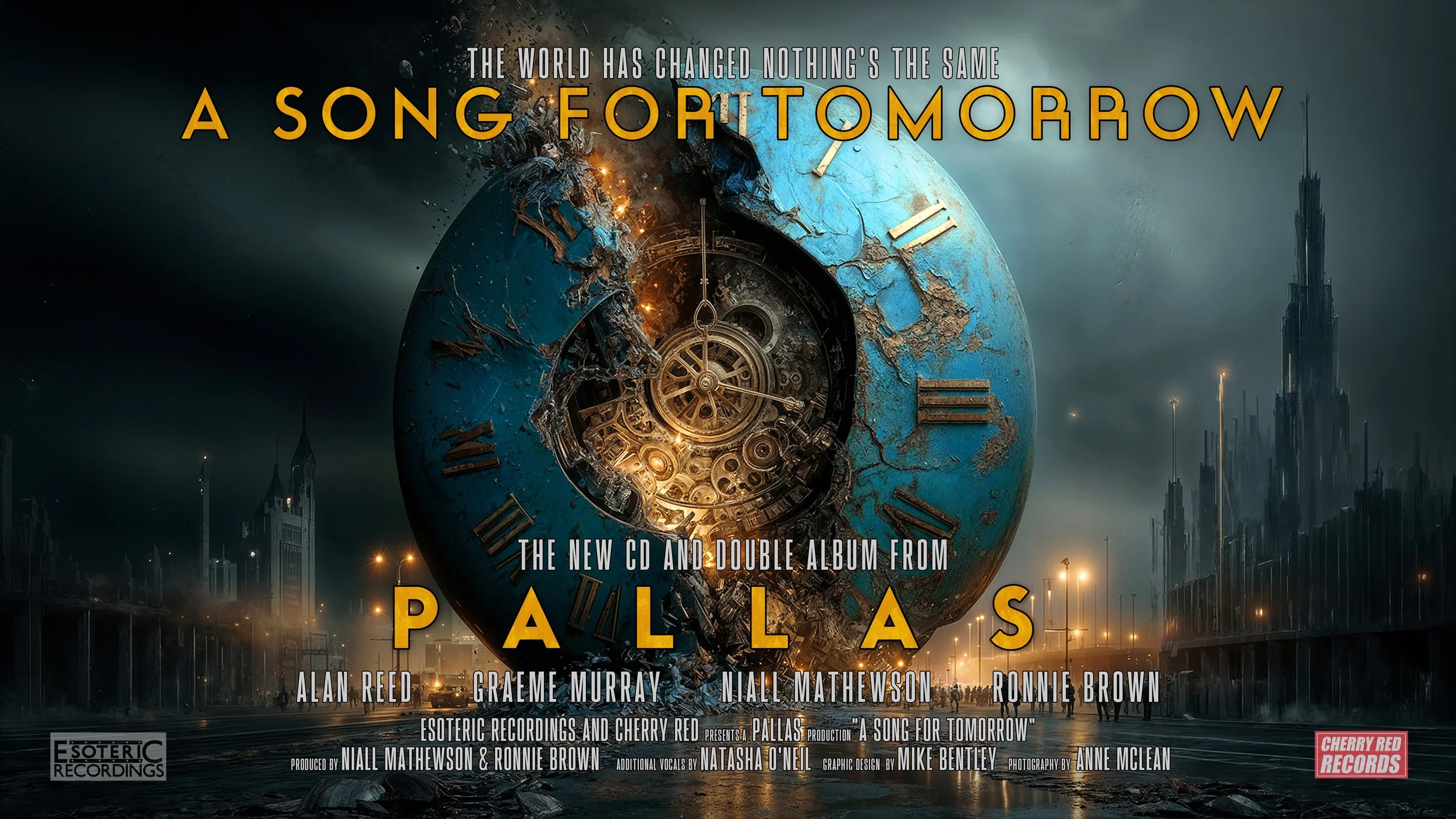
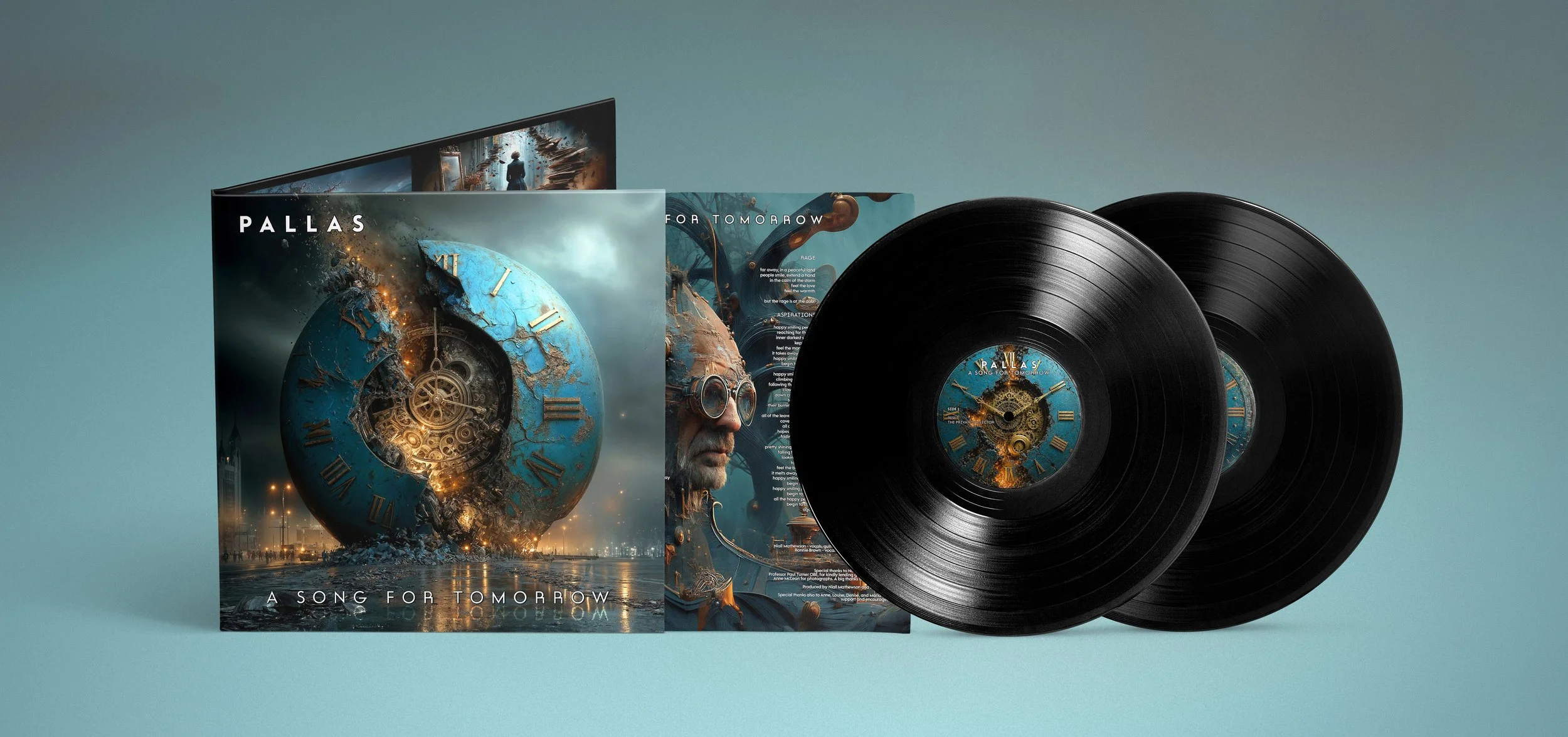
A Song for Tomorrow. Released via Cherry Red Records 30th October 2026:
Lazland
Welcome all and thank you so much for giving me your time.
Pallas
Thanks, Steve. Graeme & I are in the same room, whilst Niall is coming to you from the gorgeous country of Cambodia.
Lazland
Where in Scotland are you both?
Pallas
We're just outside Aberdeen. Graeme lives in the suburbs of Aberdeen and Ronnie slightly further out.
Regrettably, Alan is unable to join us today but sends his best wishes.
Lazland
Well, it's a pleasure to see the three of you.
I don't have a long list of questions. I like to have conversational interviews, so it's just you three being yourselves, and hopefully me being myself as well.
Pallas
Excellent!
Lazland
Now, I've been listening to you for 40-odd years, basically. You've come a fair old way!
It's frightening. I was in my late teens, early 20s, when I first heard you, alongside the likes of Marillion, Pendragon, IQ, you know that period, which was exciting!
You've come a hell of a long way since then. I'm curious, what do the three of you think about this journey? It’s been a long one!
Pallas
It has indeed. Wow. It's been a fantastic journey.
It could have taken lots of different paths. You know, we frequently have these conversations about how our musical careers could have gone in different directions. But this is the one it's taken, you know?
We maybe haven't had the widespread fame and acclaim that we hoped we might have had when we were teenagers, but it's been a blast!
We've really enjoyed it, and here we are, nine studio albums later, and we're still here, you know?
Niall Mathewson
Some of us have come up a bit further!
Ronnie & Graeme
Heavens! There's a guitarist in the room!
Niall Mathewson
Just pointing out I'm in Cambodia, so that's quite a long way.
Pallas
Have you given up those fags, Neil?
Niall Mathewson
No, no, don't be silly. Don't be silly! As Frank Zappa once said, cigarettes are food. Didn't he say that?
Lazland
I think he did, bless him.
So, I published a review of the new LP, and we'll talk about it, obviously, as we go on through the next hour.
Pallas
Brilliant review, by the way. It's absolutely fabulous. Yes. It feels like you got it!
Lazland
Well, thank you. Thank you.
I often say to musicians, I'm very lucky doing this, speaking to some very talented people, and people who I've admired, and indeed not far short of worshipped over the years. I don't have a musical note in my body. I write, I listen, and I talk about it, and that's what I love doing.
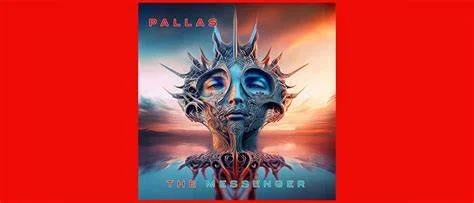
But from that perspective, when I listened to A Song for Tomorrow, and indeed The Messenger, which I adored, it's a vastly different band to that 1984 The Sentinel, 1986 The Wedge.
I said in the review of A Song for Tomorrow that I'll go back every now and again, I'll listen to them. I'll listen to Script, Kowtow, all the rest of them, and I do it really for sentimental reasons.
I prefer the new, and I like the journey that musicians take, and I like to hear what artists have got to say in 2026, as opposed to 1986. I'm curious as to what the three of you think about that.
Pallas
Thank you for that.
We feel like we try to make every album that we do a progression, you know, so we're hopefully bringing something new into each one.
Having said that, some people are saying that they can hear elements of the earlier band, in the big harmonies, the orchestral kind of feel of it as well, so that's pretty cool.
As you say, every now and again for sentimental reasons, you listen to something from years ago, and you go… oh my goodness! That’s why I got into it, you know? But musically, always looking forward.
We’re looking forward to the next one!
Lazland
Well, that was going to be the closing question, but this is the joy of the flow of conversation! I far prefer this to order.
I was going to ask you about any plans moving forward, because this LP Is not the sound of a bunch of musicians who have finished.
Pallas
That's fair comment.
Thank you for saying that.
We're having a break, you know, after finishing it, this is kind of typical after an album. We never have any concrete plans about what's happening next and the creation of the album is quite draining. It's like a year, 24/7, you know?
Lazland
Yes!
Pallas
So, you really need to recharge and get your thoughts together for what you're going to do next.
Lazland
Is it that you're drained, fed up, or somewhere in between the two when you've finished?
Pallas
We're never fed up. It's kind of in our DNA to do music, so we never get fed up and we're always craving something new as well.
We'll talk about what we're going to do quite soon, I think.
Niall Mathewson
The thing about it for me, and probably for Ronnie as well, is that when the music starts flowing, it's hard to stop. It gushes. So many musical ideas. But when you're finished doing that, the flow has stopped to a large degree. You must wait for that inspiration and build up again to go on the next one.
Lazland
Yeah, I think that that's interesting, because I interviewed Nick Barrett and it was fascinating. The way he put it was that he expresses himself, so he's in that time, he's in that particular moment, all of these musical ideas come gushing out.
But then, pause. After a while, he knows when it's time to start again, because he gets a particular itch, a mental itch, and that itch must be scratched, and that's when the new LP comes out. So, it sounds very much a similar sort of thing with you.
Pallas
Very much the same, absolutely.
It was just like waking up after being in slumber, like grumpy bears waking from hibernation.
Lazland
I can see an image. I can see now an image on the website. I will put a photograph of grumpy bears, and it will be A Pallas, something like that!
Now, obviously, in Aberdeen there, the two of you are obviously close to each other, geographically, as well as being friends and what have you.
Alan, I'm not sure. Is Alan in Glasgow, Edinburgh?
Pallas
Alan is in Sterling. So, he's maybe a couple hours away from us.
But Niall! Cambodia is not exactly around the corner. So, I would imagine that there are a fair few digital files flying about here, there, and everywhere.
Pallas
A couple, yeah!
It's a way we're compelled to work nowadays. The Messenger was the same.
So yes, this album and the last one, we've had to work in this way. I mean, there's such a lot to be said for the synergy that you have all sitting in the same room, making decisions as the notes are emerging, but our geographical location just doesn't allow for that these days. So, Graeme and I, we get together for doing vocals, bass parts, etc. And then Graeme and I went down to Alan and got his vocals done.
But, the actual writing of the music is really all file transfer now, which is fine. You know, we work at it, and we know exactly what we want to get out of it.
All our years in the business, we know exactly how to do it as well, technologically.
Lazland
And of course, you produce your work yourself, which I would imagine is a big help?
Pallas
Yes.
Lazland
It's fascinating because you were talking before about the harmonies and the orchestration on the new LP. My speakers are over there, and it generally tends to be a beautiful wall of sound, which I adore, and I love harmonies in music, with the ability of a band to surround me with sound.
I think that's actually the difference between bands such as Pallas and the more, sort of corporate commercial pop, as it's… it all sounds very weedy, it's all very simple, it's all… some of it's very good, but it's essentially throw away.
Now, but in 2026, when you listen to A Song for Tomorrow, and you're harking back to that type of harmonisation, that type of symphonic music. I would imagine there's probably a wee bit of a part of the three of you thinking, you know, I wish we could have had this technology 40-odd years ago, because by God, it would have sounded good. Fair?
Pallas
Well yes, but having said that, 40 years ago, we did have quite a lot of amazing technology. I mean, I think we used the New England Synclavier before anybody else, I think (Editor’s Note – an early type of digital synthesiser).
We saw it at a university lecture in Atlanta and we were invited there by Eddie Offord, who was producing the album. He kind of got us in and we were all sitting at the back of the hall listening to the guy telling us about, yes, it does this and does that. It's got this amount of filters and all the rest of it. And we're kind of dropping off to sleep. And then he played this chord on it that brought all these voices together into one single massive chord.
Out of nowhere. And we just looked at each other and said, I think we've maybe got the opening chord of Atlantis! So, when the thing actually arrived, it was massive, it was incredible.
It came in a van, all the drives and the peripherals and all the rest of it. So, when we got it hooked up, the very first thing was to create this sound that we'd heard for the first chord of Atlantis, which we never quite did, but we did our own version of it.
I think we're one of the first bands to actually have the Mirage sampler as well (Editor’s Note. The Ensoniq Sampler was one of the earliest sampler synths).
We've constantly been trying to push the boundary, before everybody else… if we could, you know?
Lazland
Well, that is… that is the very definition, is it not, of progressive music?
Pallas
Yeah, definitely.
Lazland
It's supposed to push back!
Pallas
Thank you for that!
When we were doing The Wedge album, we went out and harvested sounds for it. You know, we used to rehearse on a farm, and we went out and sampled all of these grain hoppers and these massive sorts of percussive things, and all of that appeared in the album. On the Tube Train. We did that in London, and that featured at the beginning of The Executioner, you know, so it felt like it was really cutting-edge stuff, you know, there wasn't a lot of people doing that thing.
Lazland
Well, it's fascinating you're saying that because around about the same sort of time as you were experimenting with that sort of sound, and the three of you probably remember it, there was a South Bank Show on Peter Gabriel, all about his fourth LP. And he was doing bonkers things, like smashing TVs in a scrapyard, and messing about with bending a ruler and the different sounds of put. So, you were doing that in the self-same period. You were doing that sort of thing without, of course, unfortunately, the sort of national exposure Gabriel had.
You were at that cutting edge at the time.
Pallas
Absolutely, absolutely! And we weren't aware of anybody else doing it either, you know.
We were quite grateful to our producer at the time, Mick Glossop.
He was very forward-thinking with stuff like that as well, you know, and we were trying to progress and just make it different.
I think we were very lucky to have to have an experience with Eddie Offord, because I tell you what, that was an experience
Lazland
I can well imagine.
Pallas
He always was a little different. Very nice man though. I've got some stories about that, but probably not for today.
Lazland
Well, I'd love to talk about it one of these days, because, I mean, if ever there was a chap for whom the word character was invented, it's probably Offord!
Pallas
Yeah, just ask him about his parrot on his shoulder.
There were bizarre things!
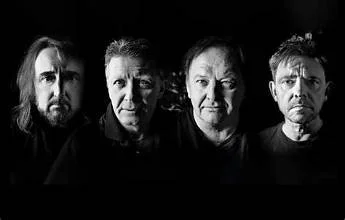
Alan Reed returned to the band for the exceptional The Messenger. This is a publicity shot in 2023.
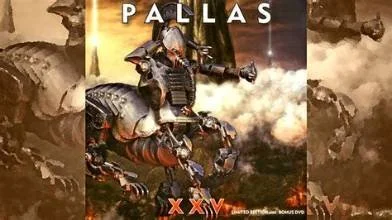
CLICKING ON THE ALBUM COVERS ABOVE WILL TAKE YOU TO PALLAS REVIEWS (AND OTHERS IN THE CASE OF THE FIRST TWO)
Lazland
So, 2025. You're getting together, you're exchanging ideas.
We're all a certain vintage, let's put it that way. And you've got a lot to say about the state of us as humanity, about the state of our politics, about the state of our technology.
We're surrounded by an awful lot of noise, and most of it not particularly pleasant, but… This doesn't strike me as a depressing LP.
Within that commentary, I get a sense that the four of you actually think, do you know what? If we… if we block out all this noise, we're not that bad, we're actually quite nice, and I think we're going to get through it all. That's the sense I got from it, anyway.
Pallas
There's a lot of optimism in that, definitely. On face value, it does appear to be doom and gloom, and nothing's going to work out well for mankind. But there's a lot of optimism in it as well, and of course a lot of it is metaphorical. So, there's a lot of subjects, and some of the songs, I think, would probably surprise the listeners if we describe them in great detail about exactly what they're about.
You know, they're not all what they appear to be when you read the lyric sheet.
I think that's a good thing. People should be able to get their own thing as well.
Lazland
Yes, I agree wholeheartedly.
I am always very, very proud as a reviewer, maybe four or five months down the line, an artist gets back to me and says, you know what, you've got that completely wrong! It really didn't mean that, and I always turn around and say, well, that's what it meant to me.
Pallas
I think your analysis and your review is generally very close, actually. That's good.
Lazland
All right, thank you.
So then… Let's go on to the LP in a bit more detail.
It’s released on the 30th of October via Cherry Red Records. They've got exclusive rights, have they?
Pallas
Yes, at present, yes.
Lazland
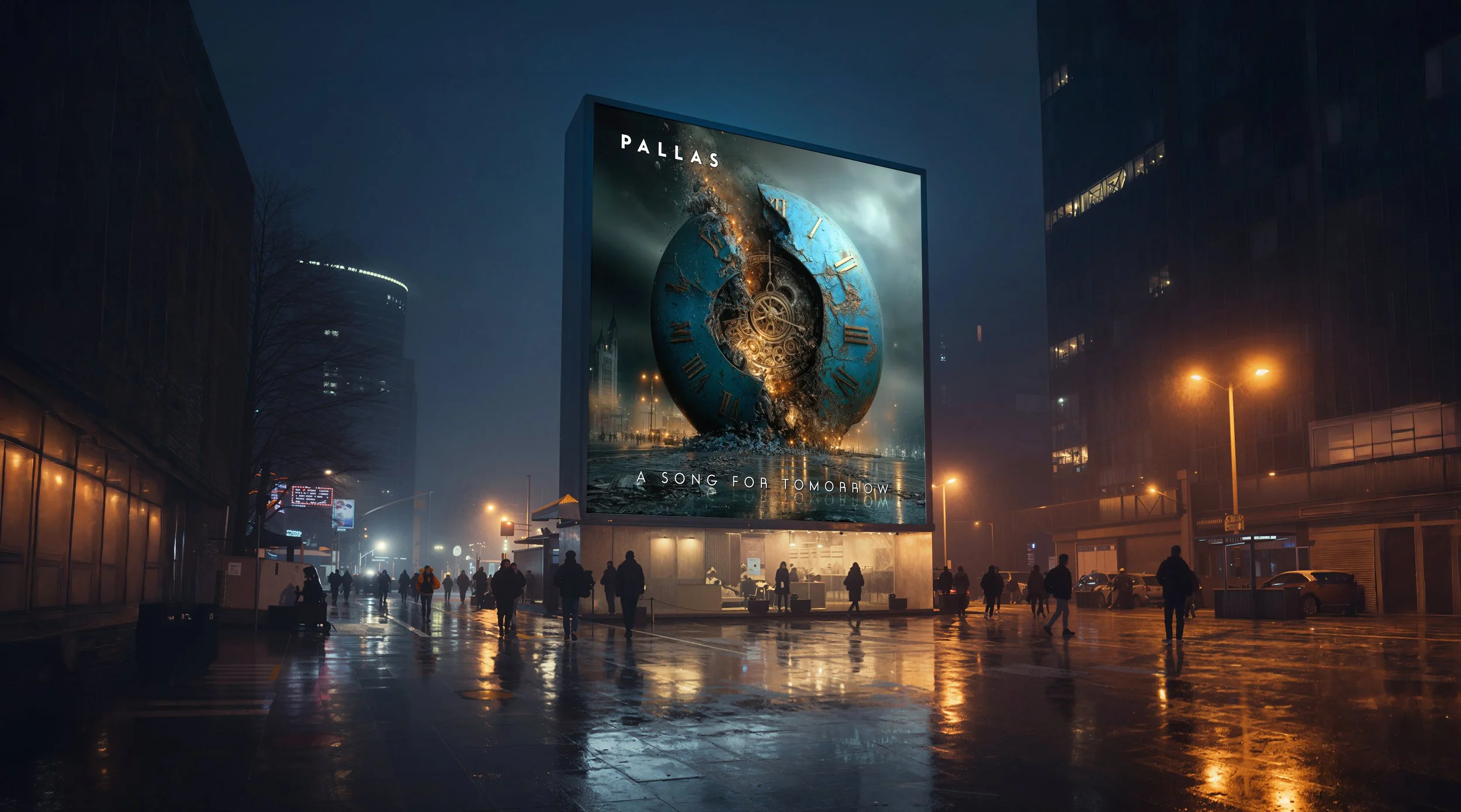
To be fair, the publicity that's been sent out and the graphics of the LP on the website all look absolutely stunning, clearly inviting interested people to come in.
The orchestration comes in straight away on the opening track, we've got Reset, and it's mournful, but then, you're hit by this stunning wave of sound. It's huge.
Pallas
You fall off your chair!
Lazland
Well, yes! It's the most magnificent din. I didn't put it in the review, but I did have a thought when that hit me, and it went back to the XXV LP, which was, what, 2011?
I think there was, not from me, but there was… a whinge, is probably the best way to put it, from some established fans, that what they regarded as a “neo-prog” band becoming a “prog metal” band, which I thought was infinitely silly.
But I take it that the harder edge to the riffs was a deliberate thing, but how did that progress and how has that manifested itself here?
Pallas
I think that's always been part of our DNA, really, the harder edge, without a doubt. A lot of people in the past used to say that the live show conveyed that more than the albums did.
I wouldn't say that we set out to give it a harder edge or the XXV was set out to give it a harder edge or whatever. I think it's just naturally the way that we're… we get excited. Yeah, it comes up with the music, you know, you get an idea, and then it just explodes. Another thing that we do is that we always thought in terms of films, you know, we convey ideas to each other in terms of movie scenes.
Lazland
Oh, that's interesting.
Pallas
Absolutely. Very, very image driven.
Niall Mathewson
I was just going to say about the hard edge. I came from a background of more rock metal, like Deep Purple and Jimi Hendrix and stuff like that. And I was always a bit puzzled why they asked me to join the band!
And that's what I've been doing for 40 years.
Pallas
He's been ruining it for us!
Lazland
Ha! That's where I started off, in terms of listening to music. Rainbow, Purple, Whitesnake, that sort of thing. And I still love it.
Pallas (Graeme)
I was a big ELP fan.
That kind of got me into rock music, because the orchestral stuff and the boards and it was all there. It was huge.
Brain Salad Surgery.
Niall Mathewson
I think we've all been influenced from all sorts of different avenues and directions. It's not just not prog, per se.
Lazland
Yes, which is why I dislike the labels, this sort of, oh, they're symphonic prog, they're neo prog, they're eclectic prog, whatever that means. It's a nonsense.
Pallas
I like to think that they're just simply for guidance, you know, for navigating people. It shouldn't really be about sort of putting people into corners.
Lazland
Yes, that's it.
So, yourself, Ronnie, we've got ELP, we've got the Purps, yourself?
Pallas (Ronnie)
Right, so when I first joined the band I knew very little about progressive rock and one of the first things that happened was I was given a pile of albums to go away and listen to so I could get used to the genre.
Niall Mathewson
Ha ha… Join the club!
Pallas (Ronnie)
But, I was thinking about this the other day, I had a 10-year lapse out of the band from about ‘87 to 97. And in that time, I played in local bands in Aberdeen, doing cover versions of chart music and stuff like that. And I honestly think that when I came back into the band, I had a few extra tools in my box.
I didn't prior to that, you know, so in terms of arrangements and lyrical content and things like that, just away from progressive rock altogether.
Lazland
I spoke to Andy Tillison a few weeks back, because The Tangent have their new LP out this week, and I'll make the same point to you that I made to him.
You've got Pallas, The Tangent, all these progressive rock bands. Now, a few weeks back, the BBC decided to do a Prog at the Proms show.
I watched it on BBC4. Hamill was there, Palmer was there, talking about ELP. Um, but the orchestral arrangements and music were from the ‘70s, the halcyon days, as it were.
But… listen to the orchestration on A Song for Tomorrow, this entire LP. I would love for that music to be featured as part of a Prom, and I've said exactly the same to Andy for The Tangent.
For an orchestra to be at the Albert Hall and to do this music, because this is…I know it's rock music, but there is a huge element of modern symphonic music within all that. Agreed?
Pallas
Yes, absolutely. When it was broadcast, I was, like, tearing my face off, because I'd love for us to have been on that concert.
It would have obviously connected. The style of music would have connected.
Lazland
Well, what I'm thinking of doing is… and I don't know whether Jerry Ewing's doing this, because I know that Jerry was involved with this particular thing, but I am thinking of writing to whoever it is in charge of music at the BBC and say, well, look, it was absolutely fantastic, thank you very much indeed, you know, wonderful stuff, but in 2026, are you aware that you have this incredible vibrant scene going on?
People that go to the Albert Hall may well not be progressive rock fans, but may well be drawn into this wonderful world if you play it.
So that's a thought, anyway.
Pallas
Thank you.
Lazland
You've talked about imagery, you've talked about movies.
Of course, Mike Bentley, who, correct me if I'm wrong, he's been with you since the very word go, hasn't he?
Pallas
He has, yes.
Niall Mathewson
He was in the band before I was.
Lazland
Because the artwork is stunning. On the review, I put the artwork for The Private Collector, which is just… it's stunning imagery, it really, really is.
Does he listen to you and come up with the imagery, or do you talk to him about the stories?
Pallas
Well, at a point in the development of the music, we conveyed to Mike exactly what each of the songs were about. And then that's when he really got to work on developing suitable work for them.
To be honest, I don't think Mike produced a single thing that any of us said, uh, no, you've missed the mark with that. It felt like it was a nice fit, really.


Lazland
I'm looking at that image, The Private Collector with his brush, and the techie female figure, the robot behind him.
It would have been easy for that image and that song to be an apocalyptic vision. You know, AI is going to kill us all within 10 years. Oh my God, we're doomed! A sort of modern-day Dad's Army character running around the hall in pure panic.
But the sense I get from that image, and indeed from the song, and we've touched on it before, and I think it's quite important, without this technology, it would be impossible for you three in Scotland to communicate with a critical musician to the band in Cambodia, and to throw all these ideas about. Effectively, Pallas wouldn't exist, would it, certainly not in its present form.
Pallas
No, that's right.
Lazland
So, there are positives associated with this scary thing.
Pallas
I guess it's just to be harnessed, really. You know, it probably needs controls.
I mean, that guy in the artwork is absolutely key to it, you know, but I think, as you pointed out in your review, you got it, that it's really about our own personal relationships with the internet, and how we willingly hand over selfies, specifications, conversations, without really thinking about what the implications could be.
Lazland
Yes, and it really is almost like getting a piece of paper and a pen, as we used to do, and writing something down. And that was an intimate, personal thing, unless we chose to… it was a… it was an act, wasn't it, to put that in the post. Whereas now, we tap away without thinking at all.
Pallas
That's right.
It's out there. Exactly.

Lazland
Also in the review, I talked about lemmings on a couple of occasions, but especially on rushing headlong. It's this sort of tendency we have as a species. We want to believe people, and it strikes me that we're losing the ability to think for ourselves when we do so. I don't know what you think about that, but that's what struck me about that track immediately.
Pallas
Very much so.
Lazland
If Donald says something, it must be right, and we'll all follow him.
Pallas
Yeah, that's pretty much the essence of it. I think rushing headlong is really, as it says in the tune, it's just about crashing on ahead without any worry about consequences. Lemmings!
These are Graeme's lyrics.
Lazland
It is a great, great piece, and it's a very, very knowing and telling piece, and I want to sort of then
contrast that… I don't know who wrote the lyrics for it, so hopefully you'll tell me, we had one single, which I did play on the radio show about a month ago, which is Mother.
It really is a beautiful piece of music. It shows to me the four of you at your finest in terms of a collective, musically.
I also think as a lead vocalist, it shows everything that Alan is and where he is now in terms of that ability to put across emotion without necessarily having to jump up and down like you see with other acts, and it's extraordinarily poignant, and a wee bit of catharsis in there, so I'm curious, who did come up with the lyrics for Mother?
Pallas
That's Niall's.
Niall Mathewson
That's about my childhood.
In a nutshell, that's what it is. I know that Alan fell in love with it as soon as he heard it, and he desperately wanted to do it, and so good he did.
Lazland
Yeah, that comes across. What you wrote, he wanted to sing. I mean, that's absolutely clear.
The Zoom clock is now ticking down furiously. I could talk to the three of you for the next four hours quite happily.
Pallas
Thank you!
Lazland
You've given me a huge amount of pleasure over the years. I think in 2026, you are at your finest.
Pallas
Excellent.
Lazland
I know that obviously there's a medical issue with Alan, I'm aware of that, but, don't stop at this album, because I think you've got a huge amount to say going forward, and I think what you're going to say, we're all going to love. And best wishes with the new LP, let's hope that sales are up there as well.
Pallas
Thank you. Thank you very much, Steve. That's really nice.
An absolute pleasure to talk to you as well.
My grateful thanks to Ronnie, Graeme, and Niall for giving me their time to discuss such a wide range of Pallas material.
This website sends its love, respect, and best wishes to Alan Reed. In 2017, I reviewed his Honey On the Razor’s Edge, and you can read that (amongst others), by clicking on this link: https://lazland.org/top-ten-albums-by-year/project-five-ed3sf
A Song for Tomorrow is merely the latest in a line of superb albums from the band, and comes highly recommended.